
Reflections from across the Tasman: Philanthropy New Zealand Conference 2026
 Thu, 19 Mar 2026
Estimated reading times: 2 minutes
Thu, 19 Mar 2026
Estimated reading times: 2 minutes

Aotearoa’s philanthropic community gathered in Auckland earlier this month for Philanthropy New Zealand’s largest conference to date. Having been more than three years since the last conference, conversations focused on renewing energy in the country’s sector and structural approaches.
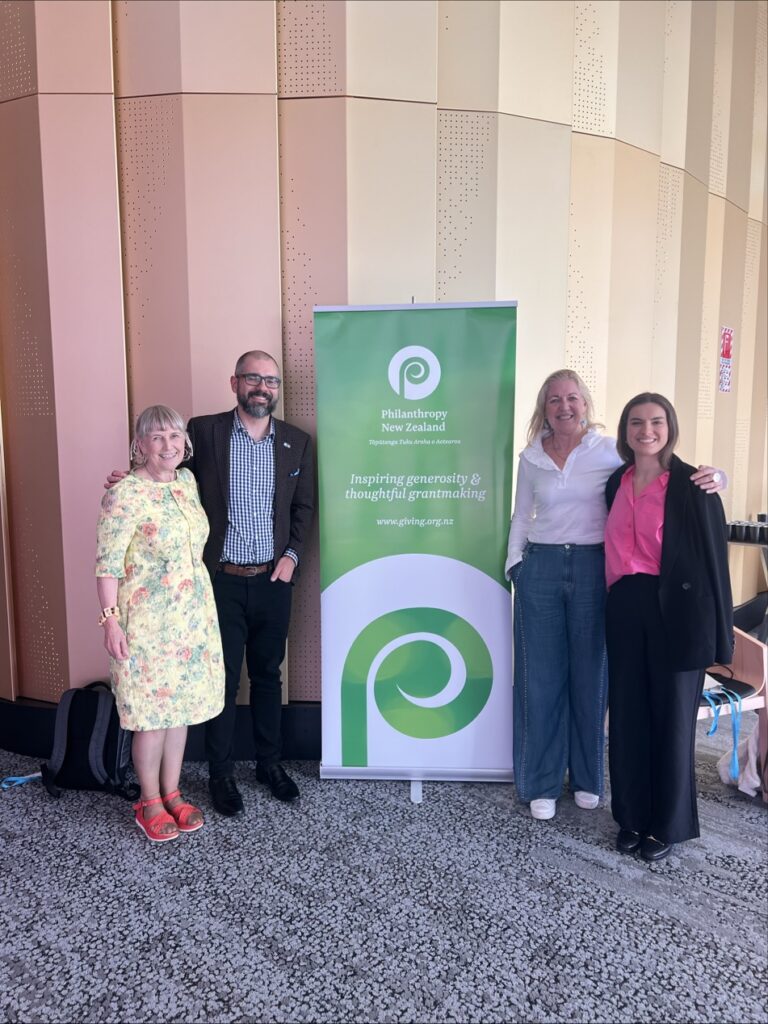
Philanthropy Australia’s Sarah Hardy, Deputy CEO, Krystian Seibert, Executive Director Policy and Sector Development, and Bella Conyngham, Director Engagement (NSW/ACT), joined the gathering and shared their reflections with Giving News. Also speaking at the conference was former Philanthropy Australia colleague Savvy Giving author, Genevieve Timmons.
AI, digital equity and the future of philanthropic leadership
Two sessions on artificial intelligence generated strong interest across the audience. Panellists encouraged organisations to understand both the potential and limitations of AI, build capability to use it responsibly, and take an active role in shaping how AI systems interpret and represent organisations. They also highlighted the importance of advocating for appropriate policy guardrails and supporting community capacity building, digital equity and experimentation.
Sarah Hardy said:
“The AI discussions were some of the most future-focused and practical sessions of the conference. They challenged us to think about how philanthropy can shape technology in ways that reflect our values, while also preparing communities for the risks and opportunities ahead.
Shared challenges and shared opportunities
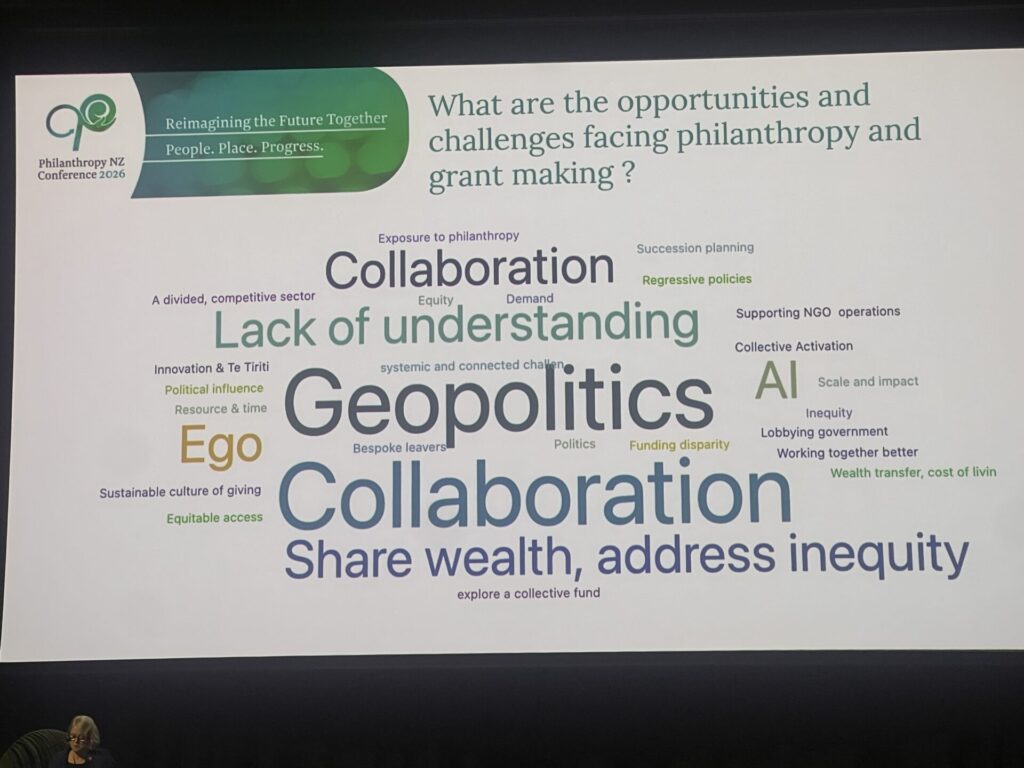
Delegates spoke about sector identity, collaboration and the evolving policy environment in ways that strongly echoed themes in Australia. Rather than focusing on the challenges, speakers signalled the potential for deeper alignment and learning across the Tasman.
Some sessions explored philanthropy’s colonial history and what philanthropy grounded in Te Ao Māori might look like today, raising important questions about reconciliation with the nation’s past and the role philanthropy can play in shaping a more equitable future.
The long history of connection between Philanthropy New Zealand and Philanthropy Australia was also acknowledged. Jenny Gill, Board member of Te Rourou, One Aotearoa Foundation reflected that a visit to Australia in 1990, including time spent with Philanthropy Australia, helped inspire the establishment of PNZ.
Krystian Seibert said:
“A lot of the conversations felt familiar. Questions about coordination, trust, sector identity and policy settings are very similar to ones we continue to face in Australia. It reinforced how important cross-Tasman learning is, especially at a time when both sectors are asking how philanthropy can show up with greater clarity and purpose.”
The diversity of voices
There was a strong focus on Rangatahi, which is a Māori word that typically refers to young people. However, it is more than just an age group, it aims to encapsulate the cultural views of young people such as emerging leaders, contributors to community wellbeing and essential voices in shaping the future.
Bella Conyngham reflected:
“What stood out most was how clearly the conference themes reflected the unique philanthropic identity of Aotearoa. Sessions explored deeply rooted issues such as climate change, child poverty and systemic racism, and there was a strong call for philanthropy to move beyond transactional giving and into system redesign.
Hearing funders speak so openly about long-term partnerships with iwi, meaning Māori tribal groups and communities showed how central Te Ao Māori thinking has become to conversations about impact, equity and the future of giving.”
Closing
As the gathering drew to a close, the guiding whakataukī Kia pariparinga te tai ka monenehu te kura felt especially resonant. This proverb, gifted to the conference and drawn from a waiata written by Phyliss Luke and translated by Kura Moeahu, reminded delegatesthat when the tide is pristine and clear, its shimmering beauty becomes revealed.
Strategic priority
Advocate, Amplify, Convene, Influence


