
COP31: ‘Risk is the philanthropist’s superpower’
 By Stacey Knott, Senior Lead, Media & Content
 Fri, 13 Nov 2026
Estimated reading times: 2 minutes
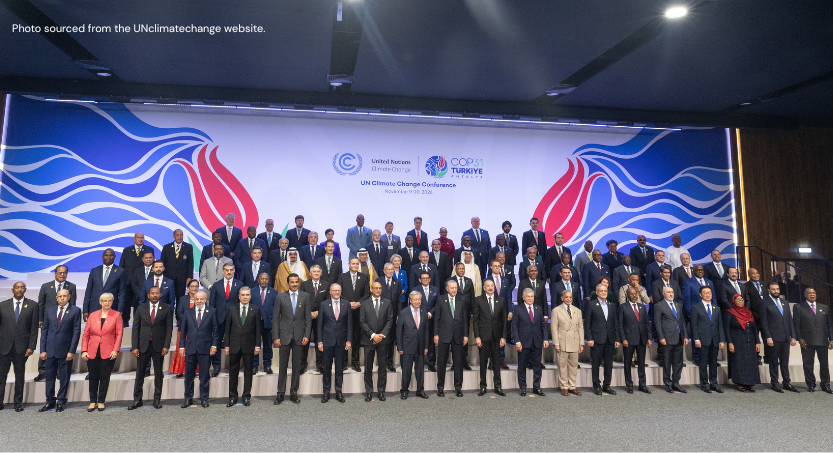
As almost 200 countries gather in Antalya, Türkiye for COP31, Australia finds itself in a unique position. While it is the President of Negotiations responsible for building consensus among nations at the gathering, it also faces renewed scrutiny over its continued approval of new coal and gas projects.
The Hard Truths campaign is one example of how that tension is being challenged through legal avenues. Ten Australians have lodged a complaint against the Australian Government with the United Nations Human Rights Committee, asking it to declare that Australia cannot continue approving coal and gas exports “without a plan to prevent dangerous climate harm and keep people safe”. Claimants involved in the case will be at COP31.
Deb Barlow is the Founder and CEO of Fairground, a foundation and impact investment organisation which supports the campaign through its funding of the Human Rights Law Centre, including a recent five-year commitment of more than $1 million for climate justice work and advocacy for a federal Human Rights Act.

Deb says support for climate justice organisations is necessary because “major political parties aren’t acting with the urgency the climate crisis requires”, and that “if the big polluters, governments and corporations alike won’t act, then we have no choice but to compel them through the law and the courts.”
She says the Hard Truths case shows that the effects of exported emissions are already being felt in Australia, and that strategic litigation can protect human rights and drive action where governments and industry fall short.
“As philanthropists, we aren’t bound by corporate structures that define success as growth at all costs, no matter who is hurt in the process. We are able to take big risks when we think it can achieve real change and impact in the field we work in. I would argue, it is in fact our obligation to take these risks,” she says.
“Risk is the philanthropist’s superpower.”
Shared leadership and collective action
Beyond calls for accountability, COP31 is a reminder that tackling climate change ultimately depends on collective action across borders, sectors and communities.
At their core, COPs (Conference of Parties to the UN Framework Convention on Climate Change) are consensus-building. Greenhouse gases do not respect borders and neither do many of the impacts of climate change. It is because the impacts are distributed unevenly that progress depends on governments, businesses, communities, and civil society cooperating.
There is a lot there that philanthropy can both learn from – and support – at these monumental events, which in the past have produced the Paris Agreement (COP21); the Loss and Damage Fund (COP27), and the first agreement to transition away from fossil fuels (COP28)
COP31 is the first to adopt a shared leadership model. It is focused is on implementation: turning existing commitments into practical action that reduces emissions, strengthens resilience and accelerates the clean energy transition. Türkiye is hosting the conference and leading the Action Agenda, while Australia is presiding over negotiations. As a co-leader of COP31, Australia pushed for a stronger Pacific voice, with Fiji hosting the pre-COP meeting and Tuvalu hosting a leaders’ segment.
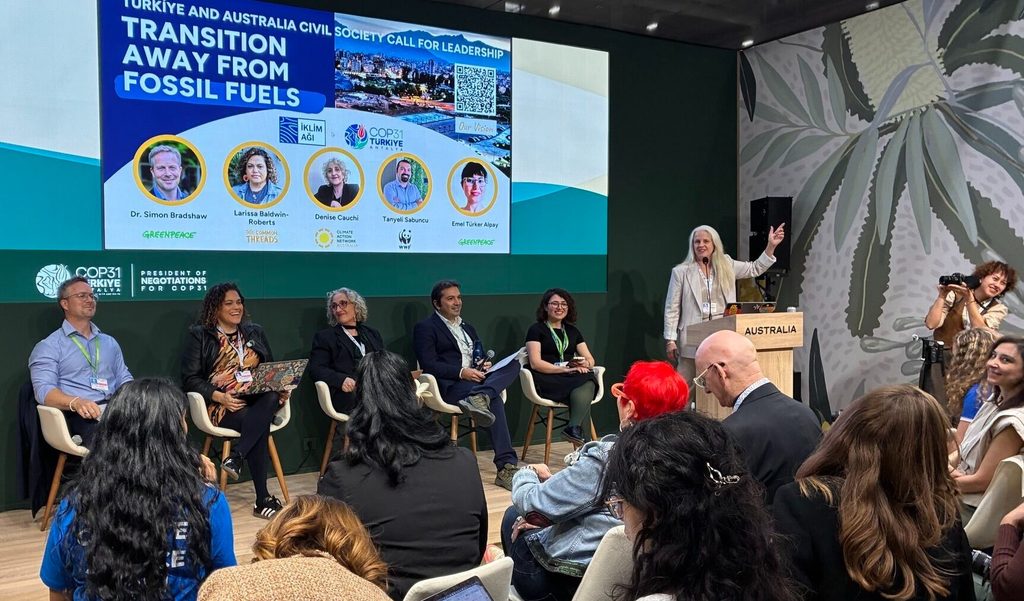
Climate Action Network Australia (CANA) is at COP31 with 80 delegates from 40 organisations. CEO Denise Cauchi, speaking to Giving News from Türkiye, says COP31 has already showcased significant leadership from Brazil, which has presented what it describes as the world’s first global roadmap for transitioning away from fossil fuels. She watched as the roadmap was presented to UN Secretary-General António Guterres.
“This was an emotional moment for me. In a process where commitments too often fade, Brazil showed exemplary leadership and followed through,” Denise says. “Now we have a plan to build on, and Australia has a responsibility to keep the momentum going at this COP.”
Erika Miller is the Head of Climate at WINGS, the global philanthropy network. She’s also on the ground at COP31.
She believes the sector can learn from the shared leadership and collective action at COP31 by working more collaboratively across borders, especially with philanthropy from regions that are often underrepresented in global spaces. She also wants to encourage the sector to apply a climate lens to its work.
“Climate isn’t a stand-alone issue, and the COP process shows this clearly. It opened with a Health Day, and climate here is also discussed as a food, children and youth, and education issue.”
She tells Giving News she’s already seen promising commitments from the philanthropy sector at COP31, including Climate & Health Funders Coalition commitments and a collaborative investment into the Tropical Forest Forever Facility.
“That’s a positive signal of a new way of resourcing the communities who keep forests standing, one that aims to attract much larger investment. What encourages me is that when funders choose to move together, they can move fast and send a clear signal to others,” she says.

Photo credit: David Tong, Oil Change International.
A Pacific-centred COP
COP31’s Pacific focus reflects both Australia’s leadership role and Pacific nations’ unique vulnerability to climate change. For the Pacific, climate change is not a future challenge but a present reality.
“Poorer countries and our Pacific neighbours need real support, not more loans they can’t repay,” Denise says. “We’re calling on Australia to commit an extra $11 billion over five years as grants, not loans, to help them deal with climate change. We also want Australia to fully back the Pacific’s own fund for protecting communities from climate disasters.
“Success at COP31 comes down to two big issues: wealthy countries need to deliver the funding to make change possible and accelerate a just and equitable transition away from fossil fuels so we can bring global warming back below 1.5°C.”

For Claire O’Rourke, CEO of the Australian Environmental Grantmakers Network, Australia’s role at COP31 is both an “immense responsibility and unprecedented opportunity for Australia, Asia and the Pacific, and for all of us committed to a sustainable future.” Claire says COP31’s outcomes will shape the policy and investment environment in which philanthropy operates for years to come.
“Philanthropy can help build and accelerate the strong communities, credible policies, political will and sustained investment that will deliver COP31 commitments, particularly where commercial capital cannot or will not.
“This means accelerating the phase-out of fossil fuels, scaling renewable energy, and translating the Paris Agreement and Global Biodiversity Framework into tangible national action that reflect the hopes our generation is placing in us.”
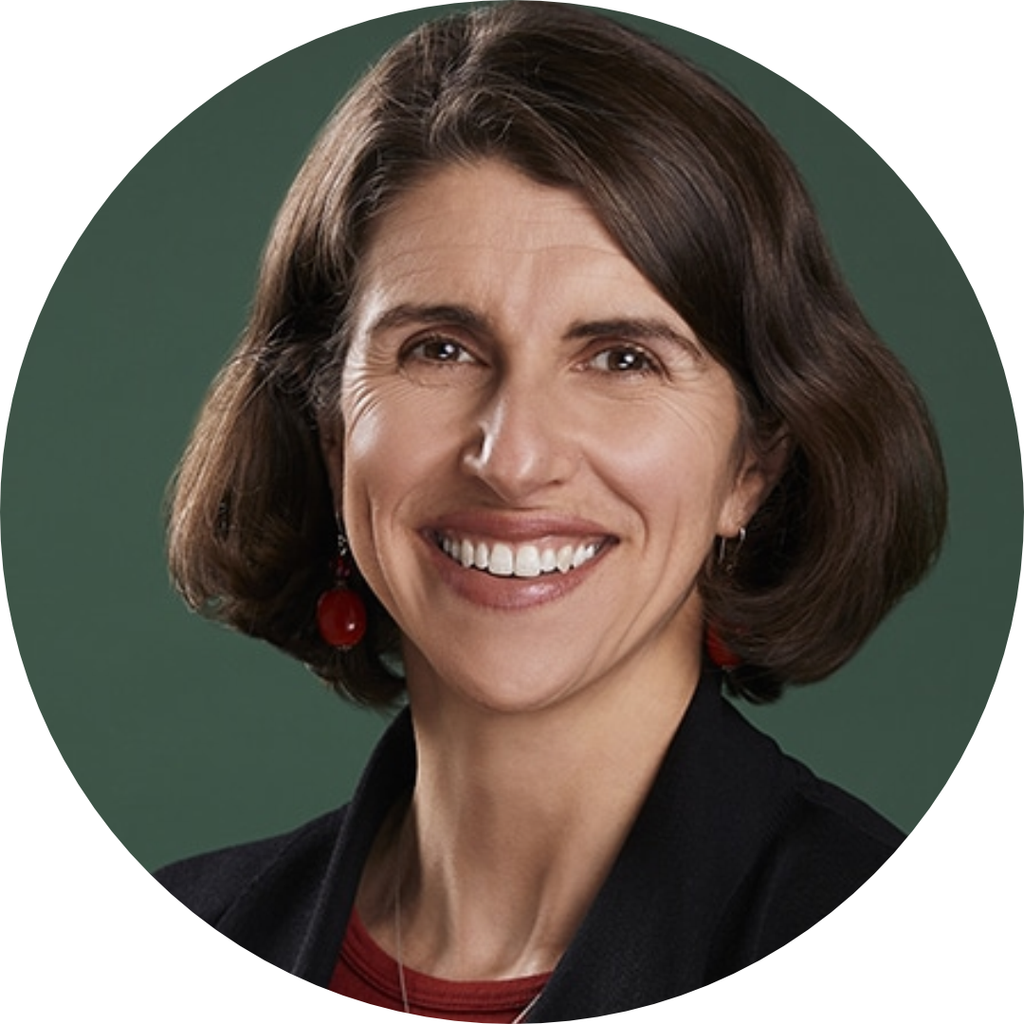
CEO of Climateworks Centre.
From commitments to implementation
Also at COP31, Anna Skarbek AM, CEO of Climateworks Centre, is backing the COP31 Presidency’s push to lift electricity’s share of global final energy demand to 35 per cent by 2035.
She says governments should endorse the target and incorporate it into national plans. Industrial precincts across Australia and Asia offer some of the biggest opportunities to accelerate electrification, while philanthropy can help turn commitments into action.
“Philanthropy can help close the gap between climate commitments and implementation by focusing on strategic priorities where climate action also improves multiple other goals,” she says.
Denise Cauchi also highlights philanthropy’s role in supporting communities and organisations working to hold governments and the fossil fuel industry to account.
“Climate justice means putting money directly into work led by First Nations, Pacific and other frontline communities, so they can make their own decisions, protect their land and ocean, and write their own plans for the future.”

WINGS’ Erika Miller hopes the record attendance at COP31 is a “positive signal of how many actors see themselves as playing a role in implementation”.
“We need real progress on direct access, meaning getting resources to the communities and local organisations closest to the impacts of climate change and who are often the first to protect against it. That’s also what will give the implementation agenda credibility.”
What’s at stake
While government representatives spend hours behind closed doors negotiating climate commitments at COP31, the summit itself is a powerful demonstration of collective action. For philanthropy, it offers a reminder of what progress requires: working together, moving early and backing those closest to the challenge to lead.
Australia has a vital role in tackling global challenges, and while no single summit can deliver everything needed, every contribution matters, says AEGN’s Claire O’Rourke.
“We need to be moving at the speed of science. Philanthropy has the ability to move at pace and encourage momentum without the constraints that governments and the private sector may experience. The real legacy opportunity for philanthropy is not simply to support COP31, but to shape what becomes possible because of it.”
Strategic priority
Amplify, Convene


 News
