
Building an enabling environment for giving: Sharing Australian insights in Ireland
 Fri, 12 Dec 2025
Estimated reading times: 3 minutes
Fri, 12 Dec 2025
Estimated reading times: 3 minutes
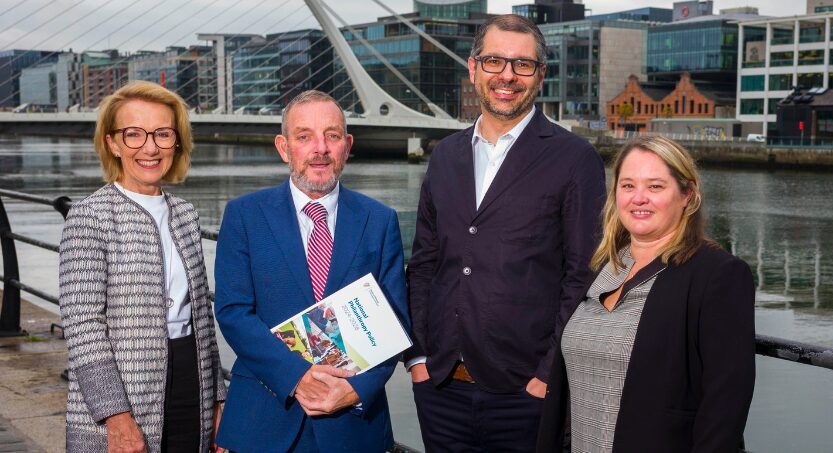
Philanthropy Australia’s Executive Director for Policy and Sector Development, Krystian Seibert, visited Dublin as a guest of Philanthropy Ireland in October 2025. Krystian spoke with Giving News about some highlights from the visit.
GN: What was the purpose of your visit to Ireland?
KS: It’s an exciting time for philanthropy in Ireland, with the Irish Government launching a National Philanthropy Policy in late 2023. Philanthropy Ireland, the peak body, was instrumental in working with the Government and partners to develop the policy, which aims to catalyse various initiatives to grow giving in Ireland. Work is now under way to progress these different actions.
In Australia, we’ve had considerable success influencing the policy environment for philanthropy. That includes the more recent commitment from the Australian Government to double giving by 2030 and initiating the Productivity Commission’s philanthropy inquiry, the new Deductible Gift Recipient (DGR) category for community foundations, or going back more than 25 years to when the precursor to Private Ancillary Funds were first introduced.
The purpose of my visit to Ireland was the share some insights from our experience in Australia engaging with governments to secure positive policy outcomes to support philanthropy and its contribution to the community. But I was also keen to hear about the work under way in Ireland and have an opportunity to take these learnings back to Australia as well.
GN: What activities did you participate in during your visit?
KS: I was hosted by Philanthropy Ireland with support from the Department of Rural and Community Development and the Gaeltacht, and participated in two events.
The National Philanthropy Policy is being progressed through the Implementation and Monitoring Group (IMG), chaired by the Department and comprised of sector stakeholders and experts. I participated in a workshop of IMG members convened by the Department to coincide with my visit.
Ireland’s Minister with Responsibility for Charities and Philanthropy, Jerry Buttimer, addressed the event, and I got the opportunity to meet with him beforehand to discuss developments in Australia and Ireland.
In his speech, the minister spoke about the Irish Government’s commitment to growing philanthropy. He commended our efforts in Australia and how they can provide insights into what’s possible in Ireland, highlighting the work of the Productivity Commission’s philanthropy inquiry. It was clear that the minister was personally committed to the National Philanthropy Policy and was keen to see outcomes flowing from it.
Following the minister’s speech, I presented insights from Australia, drawing on the Productivity Commission’s Future Foundations for Giving report and Philanthropy Australia’s policy advocacy work over many years. Following that, we had an engaging panel discussion with a number of sector representatives, including Éilis Murray, CEO of Philanthropy Ireland.
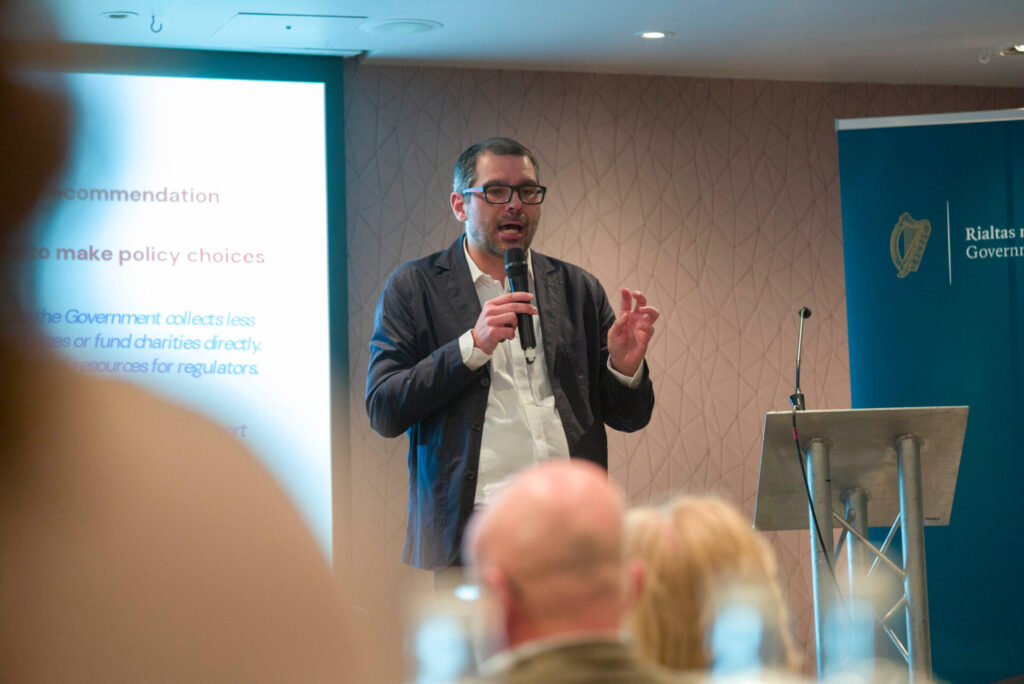
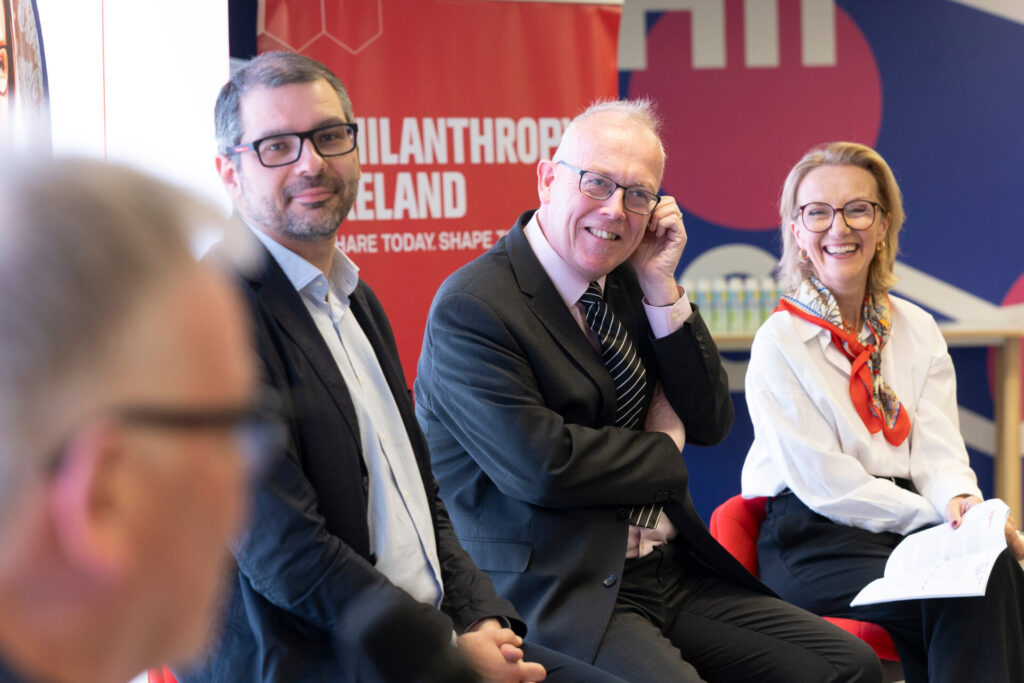
The next day, I participated in Philanthropy Ireland Symposium, which is their annual conference, covering similar themes, for a broader audience of Philanthropy Ireland members and partners.
Philanthropy in Ireland certainly feels like it’s at a tipping point, and could really take off. After experiencing some challenging economic times as a result of the global financial crisis, more recently there’s been a sustained period of consistent and strong economic growth. So, there’s a lot of new wealth, but also significant challenges within the community.
The right policy changes could help unlock a lot more philanthropy, directing more resources towards addressing these challenges and promoting the common good.
GN: What were some of the main learnings that you shared during your visit?
KS: There was a lot of interest in the giving vehicles we have in Australia, such as private and public ancillary funds, so I spoke about their role facilitating structured philanthropy. Ireland lacks a similar structure for encouraging private philanthropy, and there are limited policy incentives for larger scale giving.
I do think that private ancillary funds, in particular, are a good example of a government policy that has a clear purpose and intention to grow philanthropy, and which has had that impact. Before we introduced them 25 years ago in Australia, the policy incentives for private philanthropy were also limited.
It’s fair to say that private ancillary funds have had a big impact on the shape and direction of philanthropy here, and over time we’ve seen the role of public ancillary funds including sub-funds grow. Now we’re also seeing community foundations really blossom too.
All of that progress doesn’t just come down to policy changes. There’s a host of factors that create the right ecosystem for nurturing giving. I also talked about the important role clarity has in this context, and the need to articulate what the role of government is and what the role of the sector is.
For example, only government can change law and regulation, so they will ultimately have to be responsible for delivering necessary reforms that involve such changes.
But growing philanthropy also comes down to shifting attitudes and norms, and the sector and other players have a key role in that regard, which is a point made in the Future Foundations for Giving report. It was interesting to have some discussions about the role of advisers in this regard, which we are also having here in Australia.
GN: What were the key insights for an Australian audience that you brought back from your visit?
KS: The visit reaffirmed to me the importance of having a government policy focus on supporting philanthropy.
Looking at our experience in Australia, over a number of decades now, it’s clear that a sustained emphasis on improving policy and regulatory settings for philanthropy yields results.
We may not realise that we actually have a rather good enabling environment here. And we should value and appreciate that, aiming to make the best use of it. Of course, further improvements are still needed, such as an overhaul our deductible gift recipient (DGR) system, and we should keep pushing for those changes.
Philanthropic infrastructure organisations have a vital role to play convening members and partners, engaging governments and driving policy outcomes.
I wish to commend the team at Philanthropy Ireland, led by Éilis, for all they’ve achieved in recent years. I’m looking forward to seeing the outcomes of this work as the implementation of Ireland’s National Philanthropy Policy continues.
Read More: Krystian Seibert’s Presentation to the Irish National Philanthropy Policy Implementation and Monitoring Group Workshop.
Read More: Philanthropy Ireland Symposium 2025 Report.
Main image: L-R: Éilis Murray (Philanthropy Ireland), Minister Buttimer, Krystian and Ciara Bates (Department of Rural and Community Development and the Gaeltacht).
Strategic priority
Advocate


