
Division is a stronger perception than a lived reality
 Stacey Knott, Senior Lead, Content & Media, Philanthropy Australia
 Fri, 30 Oct 2026
Estimated reading times: 2 minutes
As Australia grapples with news of the alleged attack on Victorian independent MP Dr Helen Haines and prepares to mark the first anniversary of the Bondi terrorist attack, conversations across the country have turned again to social cohesion and how communities respond in the aftermath of violence.
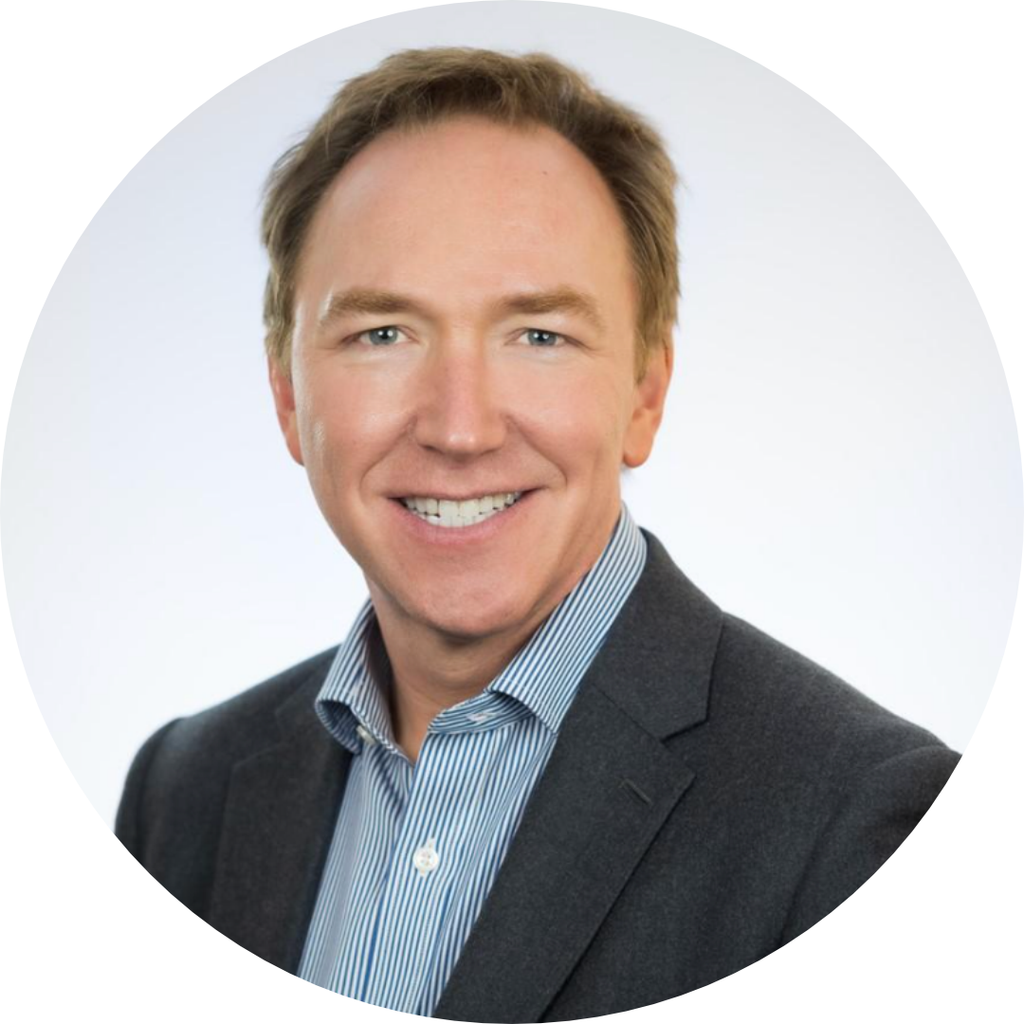
A decade ago, British MP Jo Cox was murdered by a man radicalised online. Her death had a profound impact on Tim Dixon and helped inspire him to establish More in Common, an organisation working to reunite divided societies.
“The day after Jo was murdered, I was with some of her closest friends, grieving and in shock. Suddenly it dawned on all of us what Jo would have done if she had been there. She wouldn’t have let us give in to despair. She would have wanted us to change the story and help people find hope in each other again.”
Within days of Jo Cox’s murder, her friends, including Tim, organised a memorial concert in Trafalgar Square.
They went on to raise £2 million for causes she cared about and established the Jo Cox Foundation to continue her work, including support for women in public life.
That same impulse to turn grief into connection also shaped More in Common. A decade later, Tim says the organisation has almost 100 people working in nine countries.
That experience informed Tim’s response to the alleged attack on independent MP Dr Helen Haines. Speaking to Giving News in the days following the incident, he described it as disturbing and drew on lessons learned in the UK.
“When something as horrific as the attack on Helen Haines happens, I believe we have a choice. It’s easy to be overcome by despair. But violence must never be the end of the story. This can also be the moment we bring people together and mobilise hope.”
There are parallels with the response to the alleged attack on Dr Haines. In lieu of flowers, her husband has asked people to donate to Save the Children, with more than $1.4 million donated so far.
While investigations are ongoing and no motive has been established, the incident has prompted broader public discussion about polarisation, social cohesion and the safety of people in public life.
Finding common ground
At the heart of social cohesion is the ability for people to navigate differences without allowing disagreement to become division.
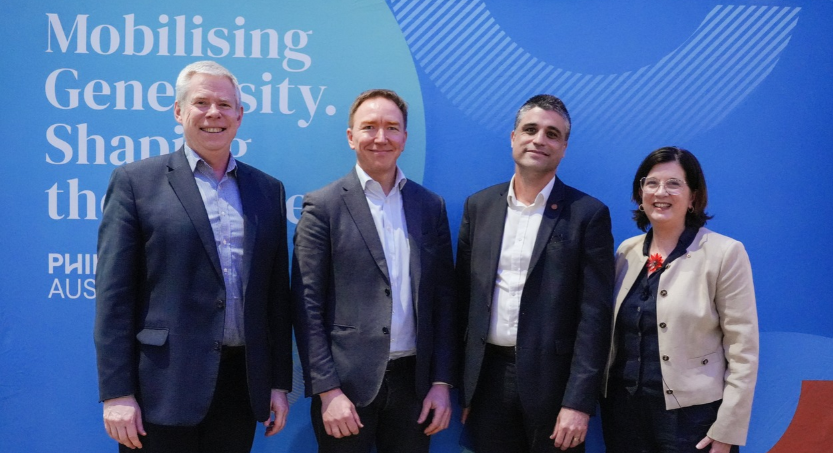
Tim’s research offers a hopeful starting point. Australians remain overwhelmingly committed to finding common ground, even as they see the country as increasingly polarised, the More in Common founder and CEO told the Philanthropy Australia Conference. His findings challenge the increasingly divided picture presented in headlines and social media feeds.
“By a four-to-one margin, Australians think the problems that we have are fixable rather than overwhelming,” Tim said. “And they also think, four-to-one, that we should work through problems by finding common ground rather than their side having to crush the enemy. That is a more positive picture than in societies that are more deeply polarised.”
“If you start with people and their values, you can often find a way through issues that can feel quite contentious,” he told the audience.
“People don’t fit into simple binaries. And yet, in the social media age, issues are so often played out in a really binary fashion.”
For Aleem Ali, CEO of Welcoming Australia, the alleged attack on Dr Haines underscores why these conversations matter.
Reflecting on the public response following the alleged attack, he welcomed calls for restraint and for people not to rush to judgement.
“My hope is that it makes us think a little differently about how we’re conducting so-called debate in this country.”
Aleem sees some of the most effective responses to national social cohesion challenges emerging locally – from welcome events at local bowling clubs, inclusive council procurement and aquatic English classes that build language skills and community connections.
“Where we see it working is when communities recognise who they are now and where they’re going, not necessarily who they were,” he said.
“Our richness as a country is found in our diversity and difference.”
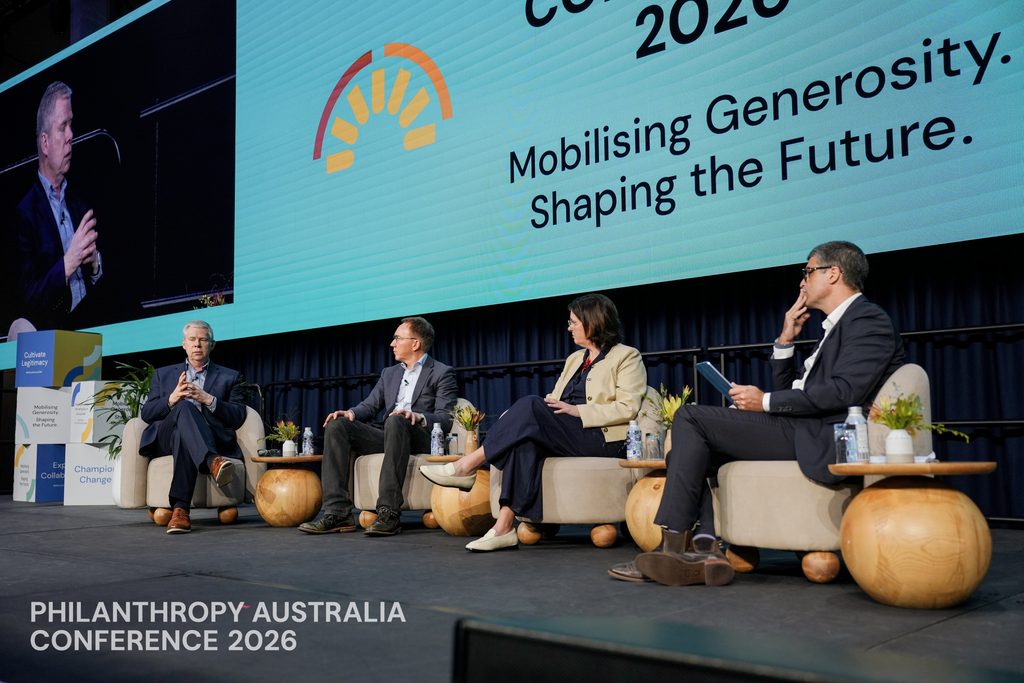
The importance of those local connections was echoed by Dr Sonja Hood AM, CEO of Scanlon Foundation Australia, which established Welcoming Australia as an initiative. Speaking at the conference, she said the Foundation’s research shows social cohesion has declined over time, although there are some positive signs.
She noted that strong communities remain one of the most important protective factors.
“People who live in connected strong communities have better senses of self-worth, better sense of belonging and better general all round trust in the environment we’re in.”
The Australian Social Cohesion Summit 2026 will explore these themes and launch the Foundation’s latest Mapping Social Cohesion Report, bringing together leaders, researchers, policymakers and community representatives to examine Australia’s social cohesion future.
When division has consequences
While Sonja and Aleem pointed to the importance of local relationships and community connection, Paul Ash focused on the online environments that increasingly shape public debate.
Paul is the CEO of the Christchurch Call Foundation which emerged from another act of online radicalisation. In 2019, an Australian white supremacist murdered 51 worshippers at two mosques in Christchurch, livestreaming the attack. Two months later, governments and technology platforms launched the Christchurch Call to combat terrorist and violent extremist content online.
Speaking at Conference 2026, Paul said polarisation cannot be separated from the information systems and online communities that increasingly shape modern life and can carry real-world consequences.
As Australia approaches the first anniversary of the Bondi terrorist attack, he warns of a less visible consequence of violence and division: the risk that people withdraw from civic and public life altogether.
“Jewish and Muslim Australians in particular are living through a particularly difficult period in which participation in public life has come to feel unsafe and difficult,” he said.
“That’s something that we see worldwide at the moment. Withdrawing from civic and social life is itself a form of harm. And when affected communities step back, the whole of society loses cohesion, and the seeds of radicalisation and extremism can take root.”
The Christchurch Call Foundation is pursuing solutions beyond crisis response. One pilot brings together participants from around the world, including members of online gaming communities, to develop approaches spanning youth mentoring and public policy responses to misogyny as a driver of extremism.
“We have a moment before us where we can look at building a safer, better online future and building technology that works for all of us,” he told the audience.
For philanthropy, the message was clear: investing in social infrastructure and local connection can help prevent division from hardening into exclusion, disengagement and extremism.
For Aleem that means helping communities build the capacity to navigate differences before disagreement becomes a crisis.
“If we can disagree- and disagree well- without it resorting to violence or extreme acts, that’s a sign of a healthy civil society and a healthy democracy.”
Strategic priority
Advocate, Convene, Engage
Subject
Communities, Diversity and inclusion, Power, Systems change


 News
