
From idea to impact: how philanthropy is powering the next frontier in medical research
 By David Sloan, Head of Philanthropy, Wesley Research Institute
 Thu, 30 Apr 2026
Estimated reading times: 2 minutes
Thu, 30 Apr 2026
Estimated reading times: 2 minutes

Philanthropy rarely begins with certainty. More often, it starts with a question: what becomes possible if we invest early in people and ideas, before the outcomes are fully known?
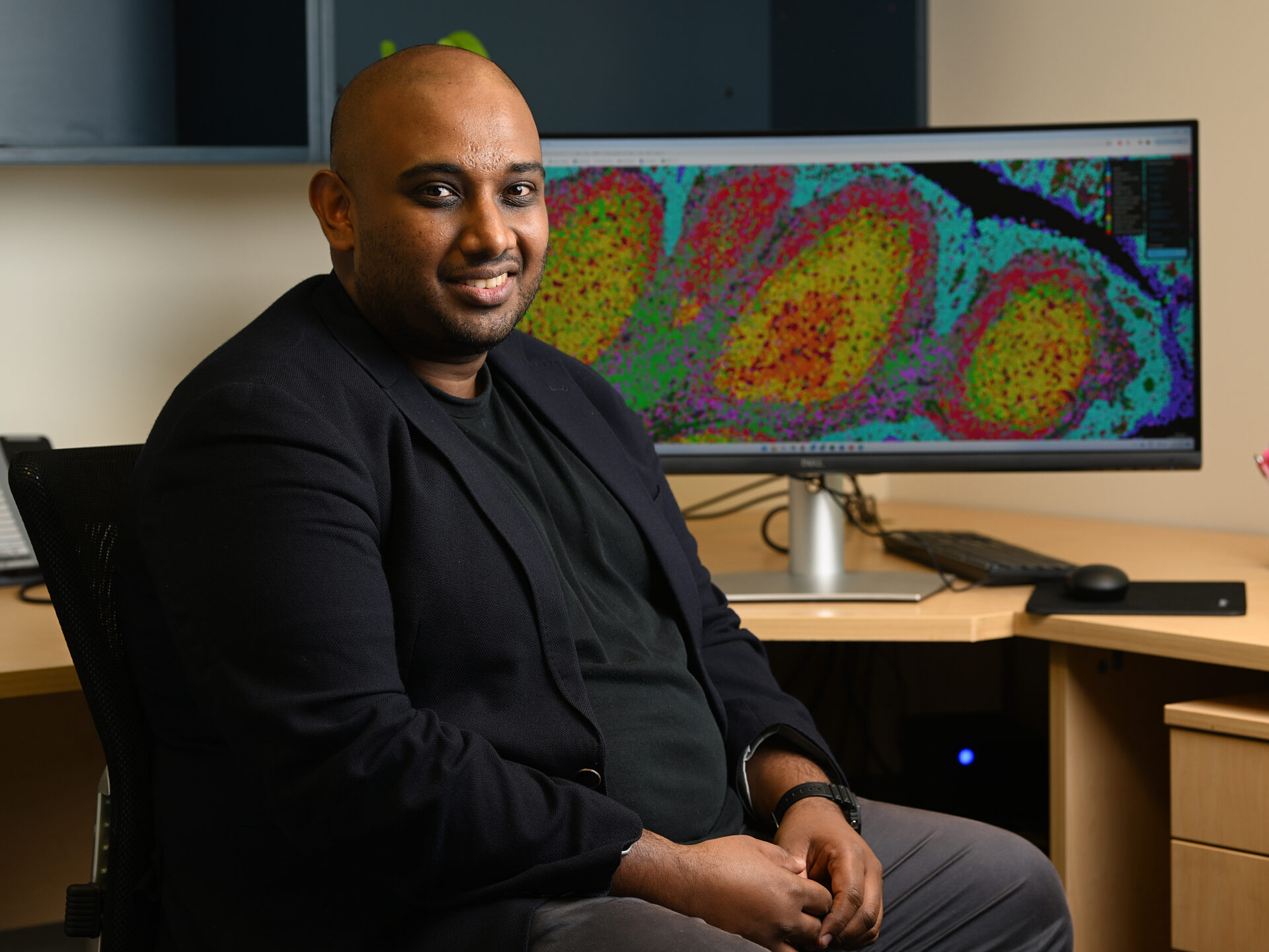
That question sits at the heart of the story behind the world’s first Chair in Spatial Medicine , based at the Queensland Spatial Biology Centre (QSBC), led by Wesley Research Institute in partnership with The University of Queensland (UQ). While the appointment itself is a global first, the deeper story is about how philanthropy created the conditions for something entirely new to emerge.
Two years ago, the idea of establishing a large-scale spatial biology capability in Queensland was still taking shape. At its core, spatial medicine brings together biology, data science and clinical insight to map disease at a cellular level, enabling more precise, personalised treatment decisions. This work is focused on tackling some of the most complex chronic diseases, including cancer and cardiovascular conditions, where a better understanding can lead to more effective, targeted care for patients.
Researchers could see the potential of investing in spatial medicine, but the infrastructure, technology and specialist teams required to realise that potential were significant. Traditional funding pathways were not designed to support such early, capability-building work and without flexible capital and long-term belief, the idea would have remained just that.
Early supporters, including the VidyaJey Foundation and the Albrecht Foundation, backed the vision before the proof points were in place, recognising its potential to fundamentally change how disease is understood and treated. They recognised that meaningful progress often depends on investing ahead of certainty, not after it.
Creating an ecosystem of support
This early support enabled Wesley Research Institute, in collaboration with UQ, to establish the QSBC and begin building the platforms, data capability and multidisciplinary teams required to operate at scale. It also did something much more important: it helped create an ecosystem.
QSBC Scientific Director, Associate Professor Arutha Kulasinghe, the inaugural Chair, was able to attract talent, build global collaborations and generate early findings that reinforced confidence in the work. This momentum was made possible because philanthropy allowed the program to move quickly and strategically, without being constrained by short-term grant cycles.
This sustained philanthropic support ultimately led to a defining milestone. In a continuing partnership with the Brazil Family Foundation, WRI announced the creation of a dedicated leadership position to steward the long-term scientific direction for the emerging field of Spatial Medicine, sitting at the intersection of research, data and clinical application.
Professor Victoria Brazil, speaking on behalf of the Brazil Family, described investing in the world’s first Chair in Spatial Medicine as a commitment to exceptional people and ideas with the potential to drive lasting change.
“The family’s support reflects a philanthropic approach focused not on quick wins, but on building enduring capability and leadership,” Professor Brazil said.
“The Chair role did not replace earlier forms of support, it built upon them, which is a model of philanthropy that is increasingly important for medical research. Leadership investments such as fixed-term or endowed Chairs provide stability, vision and international credibility. At the same time, ongoing program funding underpins the day-to-day work that turns vision into reality.”
Creating a pipeline from idea to impact
Australia’s medical research system benefits from significant public investment, including through the Medical Research Future Fund. However, the sector is operating under increasing pressure, with declining investment growth, lower funding success rates and strain on the research workforce placing long-term capability at risk.
Within this environment, philanthropy plays a distinct and complementary role. Public funding remains essential, but it is often less able to support early-stage development, infrastructure and rapid capability building. Philanthropy offers flexibility, allowing institutions to test ideas, build platforms and respond to emerging opportunities in real time.
In the case of Wesley Research Institute, philanthropic support has enabled the growth of an internationally connected research capability, grounded in Queensland but operating on a global stage. The QSBC now collaborates with leading institutions, contributes to high-impact science and is working towards translating research into clinical practice.
There is also a broader lesson for the sector. Transformational gifts like the Chair in Spatial Medicine are vital, but they sit within a wider culture of giving. Community-based initiatives, including Australia’s first National Medical Research Institute Giving Day, taking place on the 9th of September 2026, are expanding participation and awareness, bringing together more than 30 institutes to invite collective support for medical research.
This mix of major investment and broad engagement strengthens sustainability and resilience across the sector.
For philanthropists, this story reinforces a simple but powerful insight. Lasting impact is rarely created through a single gift or announcement. It is built through sustained partnership, trust and a willingness to invest before outcomes are guaranteed.
The world’s first Chair in Spatial Medicine stands as a visible milestone. But its true significance lies in what it represents: what becomes possible when philanthropy is positioned not as an add-on, but as a catalyst for progress.
And, perhaps more importantly, what can follow when that investment is sustained. We are grateful to the philanthropic partners, supporters and collaborators who have contributed to this journey, and who continue to help drive progress in medical research.
Main image: Assoc. Prof Arutha Kulasinghe, Brazil Family Chair in Spatial Medicine and Dr Meg Donovan, QSBC Lab Manager


