
Mobilising capital for good: the future of impact investing in Australia
 By David Hetherington, CEO Impact Investing Australia
 Fri, 10 Jul 2026
Estimated reading times: 2 minutes
Fri, 10 Jul 2026
Estimated reading times: 2 minutes
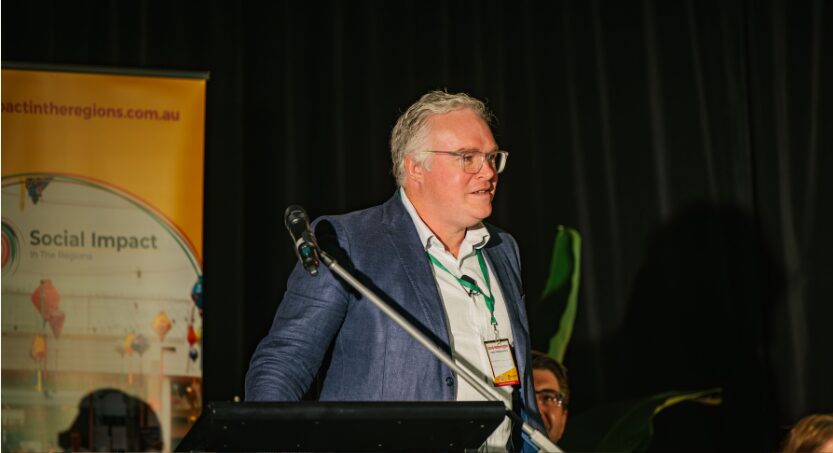
Impact investing in Australia is at a pivotal moment. The sector’s annual Benchmarking Impact Survey is now open and will inform the most comprehensive snapshot of market activity, sentiment and performance to date. Impact Investing Australia CEO David Hetherington explains why participation matters and what’s next for the sector.
What is IIA?
As the nation’s peak body for impact investing, Impact Investing Australia works to mobilise capital for positive social and environmental outcomes in and from Australia. We support the market through capability building, education, network development, policy advocacy and research.
Why is the Benchmarking Impact Survey important?
Our last benchmarking survey showed that impact investing in Australia grew nearly eightfold between 2020 and 2025, highlighting strong momentum across the sector. The survey helps track the market’s direction and strengthens transparency, credibility and investability.
We partner with the Centre for Social Impact at UNSW to deliver the Benchmarking Impact Survey, which underpins the Benchmarking Impact: Australian Impact Investor Insights, Activity and Performance Report 2026.
How can people take part in the survey?
The Benchmarking Impact Survey is now open and closes on July 31. We encourage investors, advisers, intermediaries and fund managers across the ecosystem to participate: Benchmarking Impact Survey
IIA also supports Philanthropy Australia’s Foundations Group for Impact Investing (FGII). Please share your insights into the importance of this group for the sector.
The group brings together trusts and foundations that are starting or expanding their impact investing activities. By connecting these organisations, it strengthens the impact investing ecosystem.
The group’s Market Information Days connect capital with purpose-driven enterprises seeking investment. These activities have increased awareness, confidence and participation in impact investing.
What gaps do you see impact investing filling?
Foundations and trusts have stepped into an important leadership role, with major players deploying significant capital into impact strategies and new entrants beginning their own journeys. FGII helps connect these efforts and creates a platform where others, including family offices and institutional investors, can more easily engage.
That leadership has helped accelerate development of the broader ecosystem.
Tell us about the roles of early-stage and catalytic capital in impact investing.
Early-stage and catalytic capital fill the gap between traditional grant funding and commercial investment. Impact enterprises often face higher costs because delivering measurable outcomes requires additional resources, which can reduce their appeal to commercial investors.
Concessional and catalytic capital address this challenge by accepting higher risk or lower returns. This enables promising organisations to grow and demonstrate their models. It can also help seed ventures that later attract mainstream investment.
Philanthropy is well placed to provide this type of capital, alongside limited government funding.
How can foundations and trusts drive change through impact investing, and what role do FGII and IIA play in supporting that?
Foundations and trusts are uniquely positioned to support impact investing because they are purpose-driven by design. Their missions create a natural alignment between grantmaking and investment activities. When these two uses of capital are better integrated, they become a powerful lever for change, allowing foundations to extend their impact beyond grants alone.
Structural and cultural barriers prevent foundations from undertaking more impact investing. Investment decision-making is often separated from grantmaking, and investment committees may not see impact as part of their core mandate. Their focus is typically on risk and return settings rather than social or environmental outcomes.
Education and understanding of impact investing can help overcome internal barriers. FGII’s community plays an important role in supporting knowledge sharing, peer learning and helping members get started. Over time, improving this infrastructure will be essential to unlocking greater participation.
FGII and IIA work together to build the market. FGII leads engagement with trusts and foundations, while IIA contributes broader market expertise. In other parts of the ecosystem, such as institutional investors and family offices, these roles can shift, with IIA often leading and FGII supporting.
David Hetherington is CEO of Impact Investing Australia. At Conference 2026, alongside fellow Foundations Group for Impact Investing experts, he will co-facilitate Activating your corpus for impact: A beginner’s masterclass, exploring how philanthropists, foundations and advisers can use impact investing to advance their mission. Find out more about the Conference masterclasses here: Masterclasses | Philanthropy Australia Conference
Strategic priority
Amplify, Influence


