
NAIDOC Week 2026: Celebrating Indigenous-led giving and community strength
 Fri, 10 Jul 2026
Estimated reading times: 2 minutes
Fri, 10 Jul 2026
Estimated reading times: 2 minutes
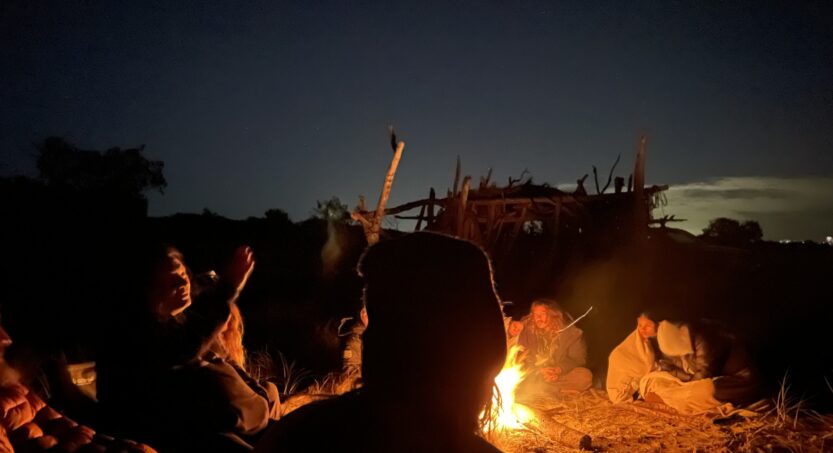
Across more than a decade working in philanthropy, Pasifika woman Raisera McCulloch observed a persistent imbalance: philanthropy rarely entrusted Indigenous communities with flexible, self-determined funding, even when the need and the capability were both clearly there. Too often, funding decisions were made at a distance from lived experience.
Raisera became increasingly interested in how power in philanthropy might be shifted, so that those with the deepest knowledge of community need would guide funding decisions. Her resolve intensified in 2020 following the murder of George Floyd in Minneapolis and the global discussions about racial justice that followed.
“I believe there are lots of well-meaning people who want to help and have input into things they’re passionate about, but often just need a mechanism offered to them,” Raisera says.
In response, she founded the Indigenous Giving Circle (IGC) in 2020. Its purpose was not only to pool funds, but to create a safe, community-centred space where Indigenous concerns could be discussed, understood and acted upon. Central to her approach was a deliberate dismantling of traditional donor–grantee hierarchies. In IGC, authority sits with Indigenous leadership rather than with funders.
“The giving circle is that mechanism and can be a safe space to learn and have conversations, which can be really difficult for Indigenous people and people of colour,” she explains.
50 Years of Deadly
In reflecting on this year’s NAIDOC week theme; 50 Years of Deadly, she says alongside celebrating Indigenous achievement across health, education, media, business and the arts, there is a strong focus on recognising who has the authority to define what progress looks like in those spaces.
“That principle sits at the heart of the Indigenous Giving Circle. From the outset, we made a deliberate structural decision to place funding decisions with Indigenous leadership rather than donors. Shifting decision-making power to those closest to the issues isn’t just a statement of values, it’s a practical mechanism for ensuring communities determine their own priorities and solutions,” she explains.
“Giving circles demonstrate that lasting change comes from Indigenous people leading Indigenous futures. Our role isn’t to direct that leadership, but to create the conditions for it to flourish.”
Centering Indigenous decision-making authority
Structurally, IGC operates with both members and non-member donors. Members contribute regularly, without a required minimum. However, unlike many collective giving models, members do not vote on recipients. Instead, IGC’s core Indigenous representatives determine how the pooled funds are allocated.
Non-member donors may either contribute to the central pool or direct their donation toward one of the selected recipients. This structure intentionally centres Indigenous decision-making authority and aligns with principles of trust-based philanthropy: once funds are granted, recipients retain full autonomy in determining how best to achieve their goals.
“I think it’s crucial for people with lived experience and cultural knowledge to play a major role in making decisions about what’s best for their communities. I honestly believe philanthropy can do this. It’s just about wanting to and being able to create space for that to happen,” Raisera says.
About 18 months after its establishment, IGC became a sub-fund of Australian Communities Foundation. This arrangement has provided IGC with administrative and compliance support, while relieving the operational burden associated with managing donations.
To date, IGC has supported three primary recipient initiatives: The Wiiyaan Story Project, which revives and sustains local narratives among Aboriginal youth on Bundjalung Country through fine arts and digital storytelling; the First Nations Women’s Fund, which enables First Nations women to create and activate grassroots initiatives; and an annual Indigenous Arts Grant supporting musicians and artists to preserve and express culture and identity.
Flexible funding
IGC has also demonstrated flexibility in funding individual initiatives. An example is a $30,000 grant made to an Elder who had provided faith-based leadership and pastoral care within Aboriginal communities for decades, largely out-of-pocket. The grant relieved that financial burden, enabling him to continue his work without the strain of ongoing fundraising.
IGC depends largely on word-of-mouth to build awareness. Being invited into broader spaces to share their story and motivations for existing has also been key to building support.
Looking ahead, Raisera envisions building a small, committed group of volunteers to strengthen outreach, pursue more consistent donors and potentially attract corporate support. She is also considering the formation of a council-like entity grounded in Indigenous knowledge, relationships and eldership authority to strengthen and sustain Indigenous-led decision-making as the group grows.
The Indigenous Giving Circle features in Philanthropy Australia’s just released landmark report Giving Together: The power and potential of collective giving in Australia. The research charts the rise of collective giving across the country and provides the clearest picture of the field to date.
Strategic priority
Amplify, Engage
Subject
Collective giving, First Nations people


