
New research reveals growing strain on Australia’s social economy
 Stacey Knott, Senior Lead, Content & Media, Philanthropy Australia
 Fri, 24 Jul 2026
Estimated reading times: 2 minutes
Fri, 24 Jul 2026
Estimated reading times: 2 minutes
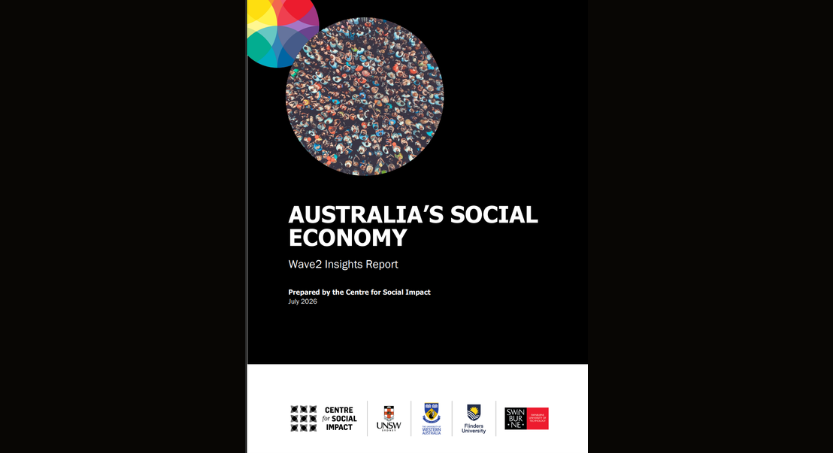
New research reveals a social economy under growing strain, as organisations navigate workforce shortages, funding pressures and increasing expectations while continuing to support communities across Australia.
Charities employ 1.6 million people – more than the manufacturing, construction and retail sectors – yet new research suggests Australia’s social economy is under growing pressure from workforce shortages, funding challenges and increasing demands to demonstrate impact.
The Centre for Social Impact’s State of the Social Economy in Australia: Wave 2 report draws on responses from more than 200 organisations across the social economy, including charities, not-for-profits, social enterprises, cooperatives, mutuals and philanthropic organisations.
Lead author Associate Professor Melissa Edwards says workforce capability emerged as a major concern, with organisations looking for support that extends beyond funding alone.
“People talked about wanting more networking, mentoring and opportunities to engage with advisors, particularly on technical issues such as cybersecurity. Access to expert advice and guidance came through strongly,” she says.
“There’s an opportunity for philanthropy to help bridge connections across issues, regions and organisations. It can play a role in seeing the broader landscape, bringing people together and supporting collaboration.”
DGR eligibility an ongoing issue
Respondents also highlighted barriers to securing Deductible Gift Recipient (DGR) status.
“DGR eligibility comes up regularly under regulatory, structural and eligibility barriers. Different types of organisations feel they face challenges in accessing DGR status.”
This is feedback Philanthropy Australia CEO Maree Sidey has also heard from across the sector.
“DGR reform remains a priority because we regularly hear from organisations that are delivering important community outcomes but face unnecessary barriers to philanthropic funding,” Maree says.
“A more modern and equitable framework would help charities and community organisations attract support, build resilience and increase their impact.”
Philanthropy Australia has long advocated for DGR reform, calling for policy changes that better reflects the diversity of organisations creating positive social impact and removes unnecessary barriers to charitable giving.
Impact measurement and reporting burdens
A key theme throughout the research was the growing burden of impact measurement and reporting, particularly for smaller organisations where they are asked to report on impact but are not funded – or given guidance – to do so.

Respondents said organisations were increasingly being asked to measure impact without dedicated funding to do so, prompting calls for more consistent reporting frameworks.
“There were lots of anecdotes from organisations saying they had to report different things to different funders. That creates a significant reporting burden,” Melissa says.
Despite the burden, organisations also reported using impact measurement to improve programs and inform future planning.
Innovation and resilience
“The tension between innovation and resilience was definitely a stronger theme this year than it was last year,” Melissa notes. “They’re trying to keep the plane flying while building new capabilities at the same time.”
Melissa adds that report shows the stakes extend far beyond the organisations themselves.
“If these organisations struggle, we lose the social fabric that holds us together in times of crisis. We’re talking about people participating in community organisations, cooperative governance and the structures that help societies stay connected and resilient.”
Asked what message she would give funders; Melissa’s answer was simple:
“Work together and coordinate – focus on the spirit of generosity and giving, and on the difference that makes. Not everything that matters is easily quantified, we often talk about the difference between outcome indicators and process indicators. Don’t forget the process. Invest in the process.”
The final wave of the Centre for Social Impact’s three-year Social Economy Survey will open in late August. Organisations across the sector are encouraged to participate and help build a longer-term picture of the challenges, strengths and future of Australia’s social economy.
Strategic priority
Advocate, Amplify, Influence


