
Reflections Beyond the Celebration Dinner
 Jones Jones (they/them), Acting Co-CEO, Rainbow Giving Australia; Ruth McNair AM (she/her), Outgoing Chair, Pride Foundation Australia; Ayan Dasvarma (he/him), Incoming Chair, Pride Foundation Australia; and Equality Australia
 Fri, 4 Sep 2026
Estimated reading times: 3 minutes
Fri, 4 Sep 2026
Estimated reading times: 3 minutes

The Celebration Dinner at Philanthropy Australia Conference 2026 brought together philanthropy, advocacy and community leaders to mark the upcoming 10-year anniversary of the marriage equality campaign and reflect on what can happen when people unite behind a shared vision.
While the evening was an opportunity to celebrate progress, it was also a reminder that meaningful change takes time, persistence and investment. The marriage equality campaign demonstrated the power of collective action, while the work being led by Equality Australia, Rainbow Giving Australia and many others today reminds us that the journey towards inclusion and equity continues.
To continue the conversation, we’ve gathered two stories that explore the impact of philanthropy, community leadership and advocacy, and the role they continue to play in creating lasting change for LGBTQIA+ communities across Australia.
Beyond Marriage Equality: How Seed Funding Unlocks Millions for LGBTQIA+ Communities
By Rainbow Giving Australia (RGA) and Pride Foundation Australia (PFA)
Nearly a decade after Australia’s marriage equality win, systemic inequality for LGBTQIA+ people persists. Despite growing awareness, philanthropic giving to our sector remains critically starved, accounting for less than 5 cents in every $100 donated, as uncovered by Where are the Rainbow Resources?. Marriage equality was a vital milestone, but it provided little structural relief for grassroots community groups. To bridge this gap, Rainbow Giving Australia (RGA) and Pride Foundation Australia (PFA) champion trust-based, community-led funding, providing early seed and systems support to turn grassroots concepts into national powerhouses.
Together, RGA and PFA focus on long-term sector resilience. Over the last two years, RGA deployed $2.5 million across nearly 200 organisations to strengthen leadership, expand regional access, and advance intersectional justice, focusing on flexible, multi-year capacity building through initiatives like the Amplify Pride grants. PFA similarly targets under-resourced priorities: establishing a dedicated forcibly displaced focus in 2019 that now directs over $100,000 annually to LGBTQIA+ refugee initiatives, alongside sponsoring national Queer Displacements conferences and backing peer-led groups in Brisbane, Sydney, Melbourne, Canberra, and Perth. PFA also drives structural change for rural and remote queer communities, funding projects like Pride in the Paddock for queer farmers, and backs First Nations Rainbow Mob. Beyond systemic reform, PFA directly supports individuals on their settlement journey. As one participant reflected after gaining citizenship: “Reaching this milestone would not have been possible without your encouragement and belief in me.”
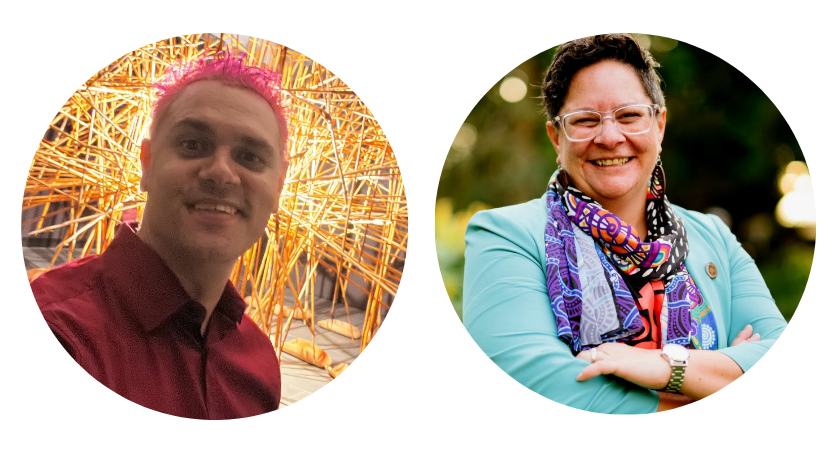
Ms Jennie Toonen (she/her), a proud Gooreng Gooreng, Kabi Kabi woman.
When philanthropy backs community leaders early, seed capital acts as a vital multiplier for major follow-on investment and life-saving impact:
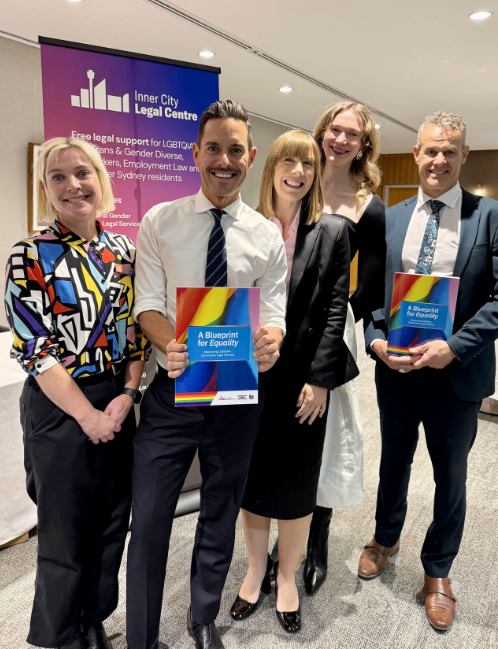
Inner City Legal Centre (ICLC): A $60,000 Amplify Pride grant from RGA funded ICLC’s A Blueprint for Equality report, established the case for specialised legal care, leading to a $3.2 million investment from the NSW Government. As Katie Green (she/they) – CEO, ICLC shared: “Thank you for backing us when this was just an idea. We genuinely don’t think we would be here without you.”
Rainbow Families: Supported via an Amplify Pride grant from RGA to hire a Fundraising and Partnerships Coordinator, the peak body for LGBTIQA+ families built the internal capability needed to secure multi-year government commitments totalling $600,000 over 2 to 3 years.
Pride Cup: Supported via an Amplify Pride grant from RGA, early programmatic funding for sports inclusion served as a springboard to launch the Community Pride Cup Fund alongside Snow Foundation, securing state sports grants and corporate partnerships to expand rainbow rounds regionally.
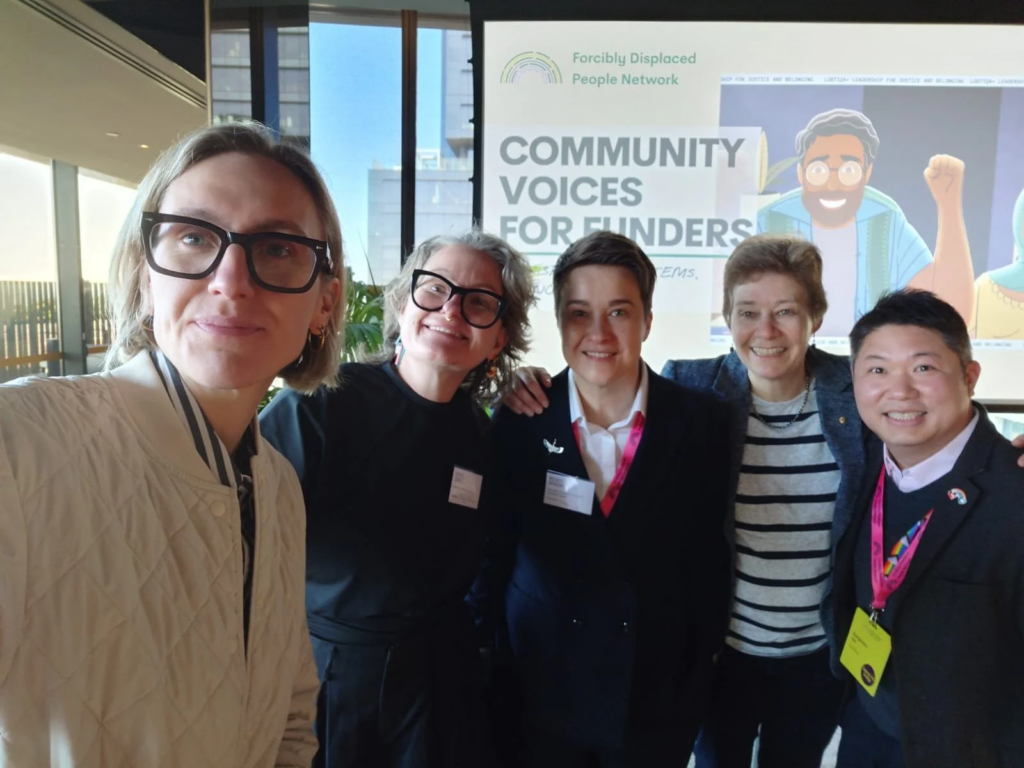
Forcibly Displaced People Network (FDPN): Co-funded with recurrent seed support from PFA and systems funding from RGA, FDPN has grown into Australia’s recognised refugee-led peak body. As Dr Renee Dickson (they/them) – Co-Founder and ED, FDPN noted on the human impact of RGA’s Amplify Pride funding: “To the whole RGA team, you are part of these first arrivals whose lives have been changed and, quite literally, saved… It is what you made possible through your grant.”
To drive genuine progress, philanthropy must look beyond short-term projects and the initial milestone of marriage equality. True equality requires sustained, everyday infrastructure. We call on funders and donors to trust community-led solutions with flexible, multi-year capital. Seed funding initiatives like these are how we scale life-saving infrastructure, build systemic justice, and finish the structural work that marriage equality set in motion.
Beyond ‘YES’, the fight to end conversion practices
By Equality Australia (EA)
When Jeremy Smith was a teenager, he was subjected to practices intended to suppress his sexual orientation. The experience had a lasting impact, shaping his future advocacy and commitment to protecting others from similar harm. Years later, Jeremy would become one of a number of survivor advocates helping to raise awareness of conversion practices and support reforms designed to protect future generations of LGBTQIA+ Australians.
“I remember having this really intense conversation with my mum in the car, basically crying and saying, ‘I feel like I was growing to hate a part of myself.’” Jeremy still remembers the “suffering and torment” he experienced before eventually refusing to go back. “I shudder to think what it would have been like after years of that.”
Conversion practices seek to change or suppress a person’s sexual orientation or gender identity. They can take many forms, including counselling, religious practices or other interventions based on the belief that LGBTQIA+ people should change or suppress who they are. Research has linked these practices to significant psychological harm and poorer mental health outcomes. For Jeremy, the experience continued to have an impact long after it ended. “I experienced ‘nice’ people in rooms talking about suppressing a part of myself, and it still left lasting scars,” Jeremy says.
It would be years before Jeremy could fully name what had happened to him, and he later wrote in his PhD thesis: “Conversion practices operate by turning the mind against the body, recruiting the self to police its own desires, setting inner truth in conflict with external authority until the conflict becomes internalised as shame.”
Marriage equality was a watershed moment. But it was never the end of the fight for LGBTIQA+ equality. In NSW, it took another eight years, until 2025, before a ban on conversion practices came into effect.
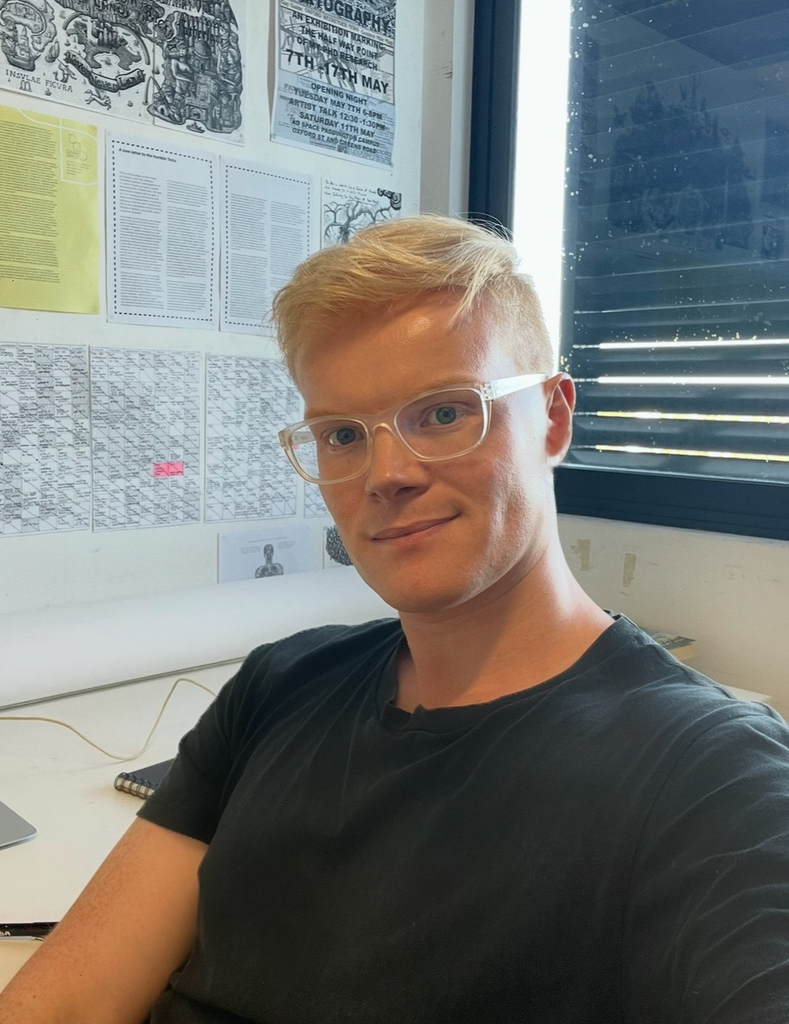
Equality Australia CEO Anna Brown, whose organisation played a key role in advocating for the reforms, says that gap is a reminder the fight for equality is ongoing.
“The marriage equality campaign showed that Australians could come together around a simple proposition: LGBTIQA+ people and their relationships deserved the same recognition, dignity and respect as everyone else. But marriage equality did not erase the laws, institutions and attitudes that continue to tell LGBTIQA+ people that they don’t deserve the same protections or rights, or that there is something wrong with who they are.”
In April 2025, NSW’s Conversion Practices Ban Act came into effect, making practices aimed at changing or suppressing a person’s sexual orientation or gender identity a criminal offence. Jeremy’s advocacy – alongside other survivors who bravely came forward to share their stories – proved instrumental in this crucial legislation passing parliament.
“When I told my story back in 2023, I was scared of the backlash from my family more than anything else,” he says. “And I was scared it might be too late — that the bill wouldn’t pass, and it would all have been for nothing.”
“The day the law came into effect, I thought of the countless people who should’ve been standing alongside us but had ended their lives to escape the pain. We did it for their memory, as much as we did it to protect future queer kids across NSW.”
Bans on these harmful practices are now in place in Victoria, the ACT, NSW and South Australia, while Queensland has a partial ban covering health settings. But there are currently no bans in Western Australia, Tasmania or the Northern Territory. Anna says every LGBTIQA+ person — and every generation that follows — deserves protection from the harm these practices cause. “These archaic practices have no place in modern Australia. They deny the humanity of our communities and can cause pain that lasts a lifetime. “We are not broken, disordered or in need of fixing. We don’t need to be anything other than who we are.”
Watch Jeremy’s story here.


