
The Future of Giving: Why Australia’s next generation matters now
 By Clementine Lucas, Head of Not-for-Profit and Philanthropic Services, Morgan Stanley Wealth Management Australia
 Fri, 10 Jul 2026
Estimated reading times: 2 minutes
Fri, 10 Jul 2026
Estimated reading times: 2 minutes
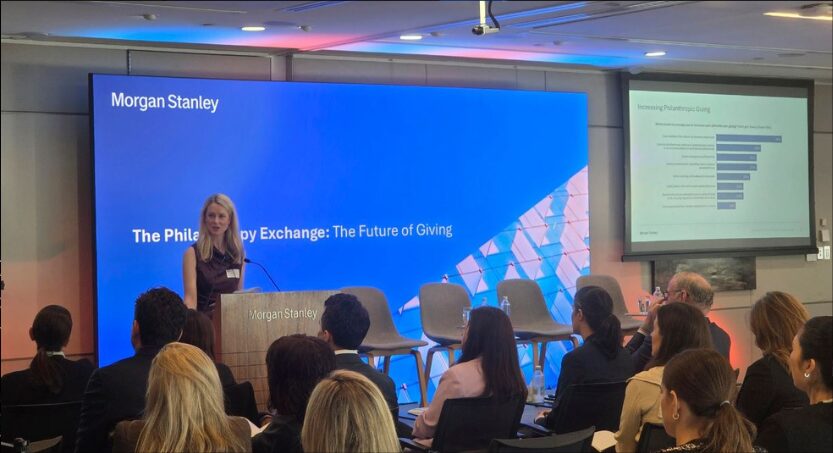
We often talk about the scale of Australia’s intergenerational wealth transfer, an estimated $5.4 trillion changing hands over the coming decades. But what matters just as much as the quantum of wealth is who will shape its direction.
Our Future of Giving research reveals that $2.3 trillion of this capital will sit in the hands, or under the influence, of Australians under 50. With that comes a profound opportunity: an estimated $108 billion could flow into philanthropy.
But this is not just a story about capital.
It is a story about a generation approaching giving differently, with a stronger sense of purpose, a desire for deeper engagement, and an expectation that their philanthropy will drive real, measurable change.
Produced in partnership with CoreData, the research explores how the next generation of high-net-worth Australians are rethinking philanthropy. What emerges is not simply a continuation of traditional giving, but a reshaping of it – one that is more values-led, participatory, and impact focused.
Why this matters, and why now
The next generation is stepping into stewardship roles earlier than ever before. They are increasingly involved in family wealth decisions, influencing how capital is deployed at a much earlier stage in their lives. At the same time, they are bringing different expectations around transparency, governance, and accountability, that are reshaping how families approach both wealth and giving.
They are also inheriting a world facing complex and interconnected challenges, from inequality and mental health to climate and social cohesion. It is therefore unsurprising that four in five Australians believe wealth comes with a responsibility to foster social good, with this sense of obligation even stronger among those under 50.
What is changing is not just the intent to give, but how giving is understood. We are seeing a clear shift away from transactional, one-off donations towards deeper participation, combining capital with time, skills, networks and long-term engagement. Impact matters, and visibility of outcomes is increasingly a prerequisite, with 58 per cent of respondents indicating that better insight into outcomes would encourage them to give more.
A more inclusive and values-led approach
Encouragingly, this shift is also being accompanied by a more inclusive approach to philanthropy. Over half of next generation donors (52 per cent) report applying a gender lens to their giving, more than double the proportion of those aged over 50, actively considering the different needs and experiences of all genders in their decision making.
We are also seeing a diversification of causes. While poverty and inequality remain central, younger donors are directing increasing focus towards mental health and environmental issues, reflecting a broader understanding of systemic and intergenerational impact.
Shifting the culture of giving in Australia
The report also highlights the influence of Australia’s cultural context, particularly our tendency towards humility, often described as Tall Poppy Syndrome. Philanthropy in Australia has historically been practised quietly, which, while well intentioned, can limit the visibility of giving and its ability to inspire broader participation.
What is interesting about this next generation is their growing willingness to share their philanthropic journeys, not for recognition, but to normalise giving and encourage others to engage.
If we want to grow philanthropy in Australia, we need to evolve the way we talk about it. Greater openness, done authentically, will play an important role in fostering a stronger culture of giving.
What this means for the sector
For the sector, this transition presents a significant opportunity.
First, there is a clear need to engage the next generation earlier. Philanthropy is no longer something that sits at the end of a wealth journey, it is increasingly central to how individuals and families think about purpose, legacy and identity.
Second, participation is key. This cohort wants to be involved, not just as funders, but as contributors of ideas, expertise and networks. Creating meaningful pathways for engagement will be critical.
Third, structure matters. The report shows that donors who utilise structured giving vehicles are more likely to give at scale and sustain their philanthropy over time. These frameworks provide both discipline and flexibility, enabling families to embed their values while engaging future generations.
Finally, impact needs to be clearly articulated. Organisations that can demonstrate outcomes, communicate effectively, and build trust will be best positioned to engage this new generation of donors.
Looking ahead
As control of wealth shifts, Australia has a unique opportunity to build a more engaged, transparent and impact driven philanthropic landscape.
The intent to give is already there. The question for all of us – advisers, organisations and sector leaders – is how we support the next generation to translate that intent into sustained, meaningful impact.
If we get this right, the coming decades will not simply represent a transfer of wealth, but a transformation in how that wealth is used to shape a more inclusive and resilient society.
Clementine Lucas is the Head of Not-for-Profit and Philanthropic Services, Morgan Stanley Wealth Management Australia
Read the report here The Future of Giving: How Australia’s Next Generation is Redefining Philanthropy
Strategic priority
Amplify


