
The Giving Academy changed how this NFP CEO thinks about philanthropy
 Thu, 14 May 2026
Estimated reading times: 3 minutes
Thu, 14 May 2026
Estimated reading times: 3 minutes

Stepping into a CEO role is never simple. And in the not-for-profit sector, the challenges are distinct. For Amy Low, taking the top role at a high-profile social enterprise brought a steep learning curve, particularly in navigating philanthropy.
Amy stepped into the CEO role at The Social Outfit, a Sydney-based work-integrated social enterprise that supports refugee and migrant women through employment and training in the fashion industry, in February last year. Since the organisation began in 2014, it has directly employed more than 130 women, paid more than $2 million in wages, and supported more than 1,000 women through its training programs. It counts Her Excellency the Honourable Sam Mostyn AC, Governor-General of the Commonwealth of Australia, as a long-time customer and patron, who this year commissioned The Social Outfit to make her gown for the royal reception for King Frederik and Queen Mary of Denmark.
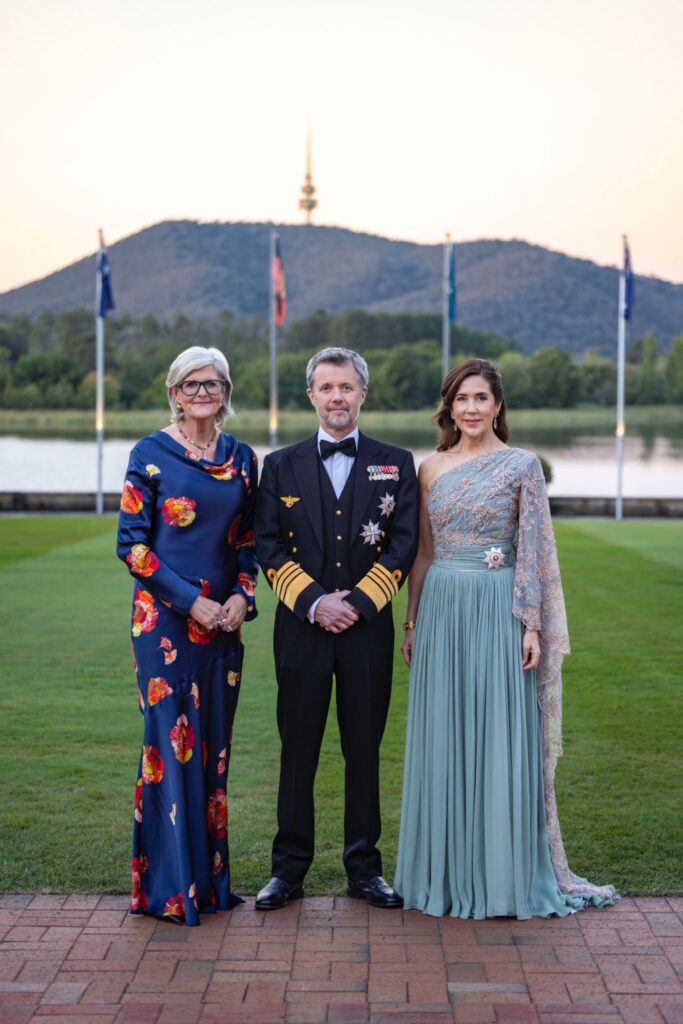
Amy served on the board of the Social Outfit for a decade before becoming CEO, so she knew the organisation well. However, the realities of running a social enterprise day-to-day, and raising funds for it, required a shift in mindset, especially given her background working in the corporate sector. Understanding how philanthropy works quickly became a priority.
Learning the Language of Philanthropy
Not long after starting, Amy was offered a place in a pilot short course with The Giving Academy, delivered by the Centre for Social Impact. The face-to-face Effective Giving course in Melbourne offered a rare opportunity for Amy to step inside the philanthropic ecosystem and hear directly from funders and peers.
“I wanted a fast-track, immersive learning experience. To be in the room with leaders and absorb as much as I could to make my work more effective,” Amy told Giving News.
Coming from a commercial background, Amy was used to clearly defined value propositions and transactional exchanges. Philanthropy, she discovered, operates differently.
“Philanthropy can feel opaque to those who are new to the sector,” Amy said. “The course helped me unpack the structures and motivations that shape philanthropic decision-making; to understand that philanthropy is less transactional, and more relational.”
She added that the face-to-face format played a key role in building trust among participants and enabling more honest, practical conversations. While some sessions pushed participants outside their comfort zones, this was part of what made the experience so valuable.
| Exclusive offer for eligible Philanthropy Australia members The Giving Academy is Australia’s flagship learning program for the philanthropic ecosystem. Purpose built by the Centre for Social Impact and supported by Philanthropy Australia and sector leaders, the Academy’s immersive short courses set a new benchmark in philanthropic education to ignite more effective, impactful giving. Philanthropy Australia members from a grantmaking organisations distributing less than $5 million annually are eligible for a 20% discount on Giving Academy courses. Enrol here: https://www.csi.edu.au/education/the-giving-academy/ |
From transactional to relational
Through the course, ambiguities of philanthropy began to shift for Amy. Rather than viewing funding as a series of applications, she began to see it as a set of relationships grounded in shared goals.
She now approaches funding conversations with greater clarity: understanding the differences between funder types, knowing what to prioritise, and tailoring communication accordingly. This has led to a more focused and confident approach, both in grant applications and in direct engagement.
“This shift, from transaction to partnership, has been central to how I approach my role now,” Amy said. “The format of the course enabled open conversations with funders, and a deeper understanding of giving structures. This has shaped a clearer and more effective funding ask, and I’m pleased to share that it led to immediate and essential funding,”
The organisation’s latest impact report reflects this shift, balancing depth with accessibility and ensuring that its work is clearly connected to funder priorities.
Just as importantly, the course helped Amy become more strategic about where her team invests its time, moving away from chasing every opportunity and towards building relationships with funders aligned to its work.
Relevant for all leaders
For Amy, the journey into philanthropy is still unfolding. The Social Outfit has a goal to employ 300 women by 2030, further addressing the significant barriers to employment faced by refugee and migrant communities.
She said the Giving Academy has given her greater clarity, confidence and purpose. And as she continues to lead The Social Outfit, those insights are already shaping deeper, more sustainable impact.
“The Giving Academy is relevant for any leader navigating philanthropy, whether from the funding or delivery side,” Amy said. “It’s really valuable for anyone thinking strategically about where capital can make a difference.”
Strategic priority
Amplify, Influence


