
What is wealth for? Revisit the Conference conversation challenging philanthropy to think beyond silos
 Fri, 16 Oct 2026
Estimated reading times: 2 minutes
Fri, 16 Oct 2026
Estimated reading times: 2 minutes

One of the questions that circled around conversations in every corner of the Philanthropy Australia 2026 Conference was posed by the panel discussion: What is Wealth For?, which challenged philanthropy to reconsider how it understands wealth, power and responsibility.
Bringing together perspectives from climate action, First Nations leadership, regenerative economics and youth climate justice, the discussion explored the connections between issues often treated as separate – from inequality and environmental degradation to democracy, power and intergenerational responsibility.
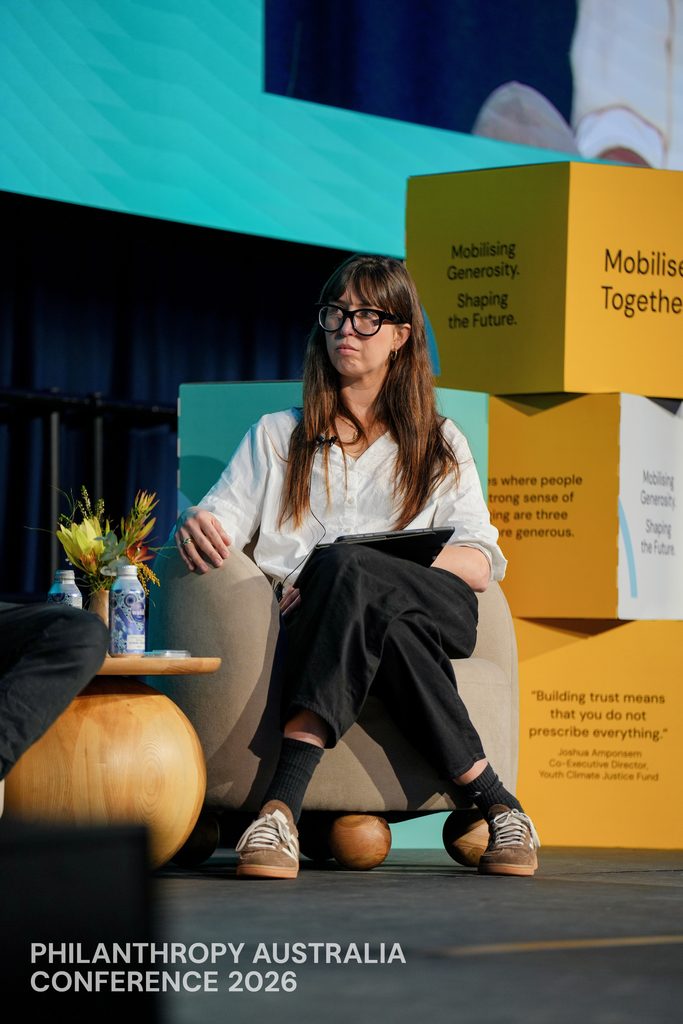
Here’s what Giving News took away from the riveting conversation.
Today’s crises are interconnected
Opening the session, Australian Environmental Grantmakers Network CEO Claire O’Rourke said rising inequality, ecological breakdown and increasing pressure on democratic systems are often treated as separate challenges sitting in silos.
“But we can consider how philanthropy’s responsibility can be harnessed to address the systems and narratives that determine what we value, how we define prosperity and what futures are protected.”
Session moderator Arielle Gamble, CEO of Groundswell Giving, reinforced the need to understand the systems behind the issues philanthropy seeks to address.
“The only way that I’ve been able to do that is to keep zooming out. So, emissions need to go down, but as you’re looking at that you zoom out and see fossil fuel influence, political influence, media concentration. Then you zoom out again and you’re looking at democracy … you’re looking at wealth.”
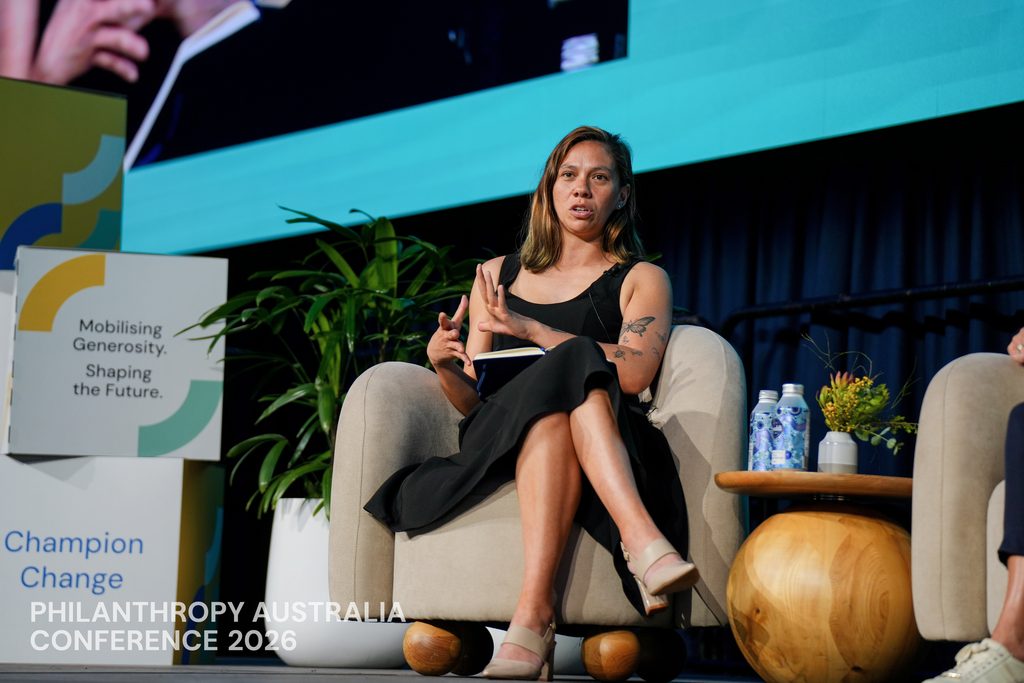
Stewardship should replace ownership
Speakers suggested wealth holders should see themselves not simply as owners of resources, but as stewards or custodians. This means recognising responsibilities to communities, nature and future generations, and considering long-term consequences rather than short-term gains.
Wealth is more than money
Speakers challenged the idea that wealth is simply financial assets.
Sapphire Dawson, Manager of Operations and Governance at First Nations Futures, highlighted knowledge, relationships, culture and access to healthy environments as critical forms of wealth, emphasising interconnectedness and wellbeing, grounded in First Nations worldviews and approaches to stewardship.
Wealth should circulate, not concentrate
Elina Wilson, co-founder of Salt Catalyst, argued that extreme concentrations of wealth can weaken social systems. Philanthropy and investment should regenerate ecological, social and human capital rather than solely preserve financial capital.
Good ancestors build capacity
Joshua Amponsem, Co-Executive Director of the Youth Climate Justice Fund, challenged traditional ideas of legacy. “Good ancestors do more than pass on wealth: they create conditions for future generations to thrive by investing in agency, leadership, knowledge, decision-making power and opportunity,” he said.
Michael Davis, Regenerative Economy Lead for WWF Australia advocated to “always challenge power. Think about power constructs and challenge those and immerse yourself in nature as much possible and listen to what it has to say to you.”
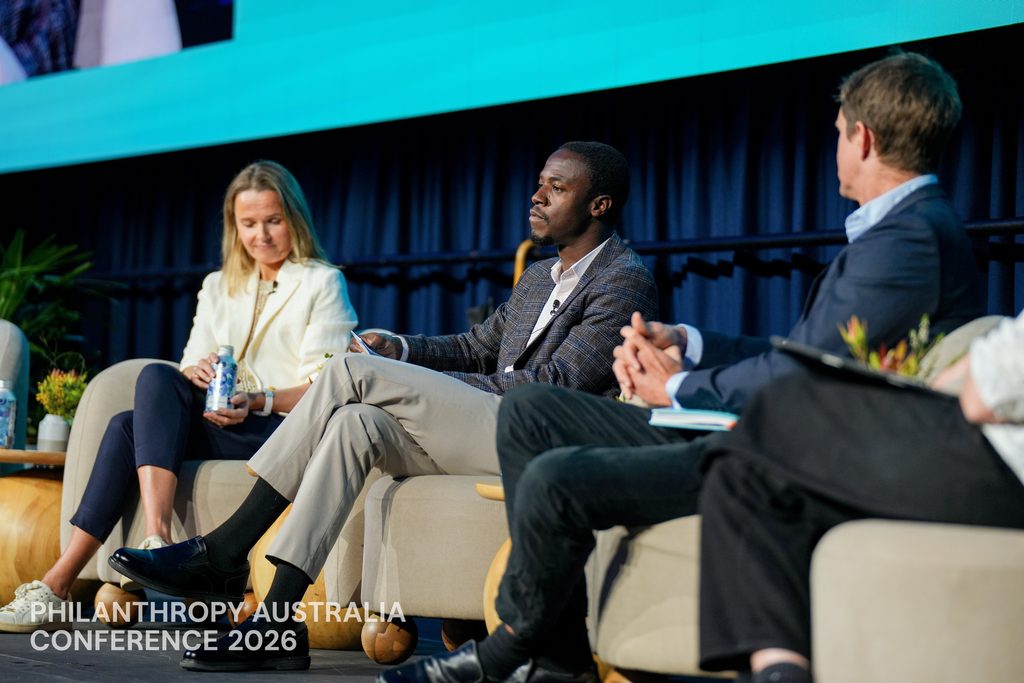
Looking beyond individual programs
Across the discussion, speakers urged funders to look beyond isolated programs and consider the wider systems in which their decisions operate. That involves questioning how wealth was created and accumulated, whose knowledge shapes priorities, where decision-making power sits and whether investments support the same outcomes as grantmaking. The lesson was not simply to give more, but to use every form of capital with greater awareness, humility and accountability.
Read more Philanthropy Australia Conference 2026 takeaways here: Philanthropy Australia Conference 2026 Highlights – Philanthropy Australia
Strategic priority
Convene, Influence
Subject
Environment, First Nations people


 Page
Page

 News
News