
Why generosity sits at the heart of Treaty
 Stacey Knott, Senior Lead, Content & Media, Philanthropy Australia
 Fri, 21 Aug 2026
Estimated reading times: 2 minutes
Fri, 21 Aug 2026
Estimated reading times: 2 minutes

The concept of generosity was crucial on the path to Victoria’s Treaty and will be equally important in the decades to come, as Treaty is ultimately about building a better shared future for all Victorians.
Rueben Berg is a member of Gellung Warl – First Peoples’ Assembly of Victoria, a former Assembly Co-Chair and a proud Gunditjmara man. He helped shape the Treaty Negotiation Framework and led engagement with the State.
The Treaty preamble places the value of generosity at the heart of Victoria’s shared future, calling on Victorians to face hard truths, imagine something better and walk forward together. For Rueben, that invitation reflects generosity not simply as an act of giving, but as a willingness to listen, share responsibility, and build a new relationship.
Generosity at every level
That relationship sits at the centre of Treaty, between the State of Victoria and First Peoples, and, Rueben explains, it must be sustained by generosity at every level.
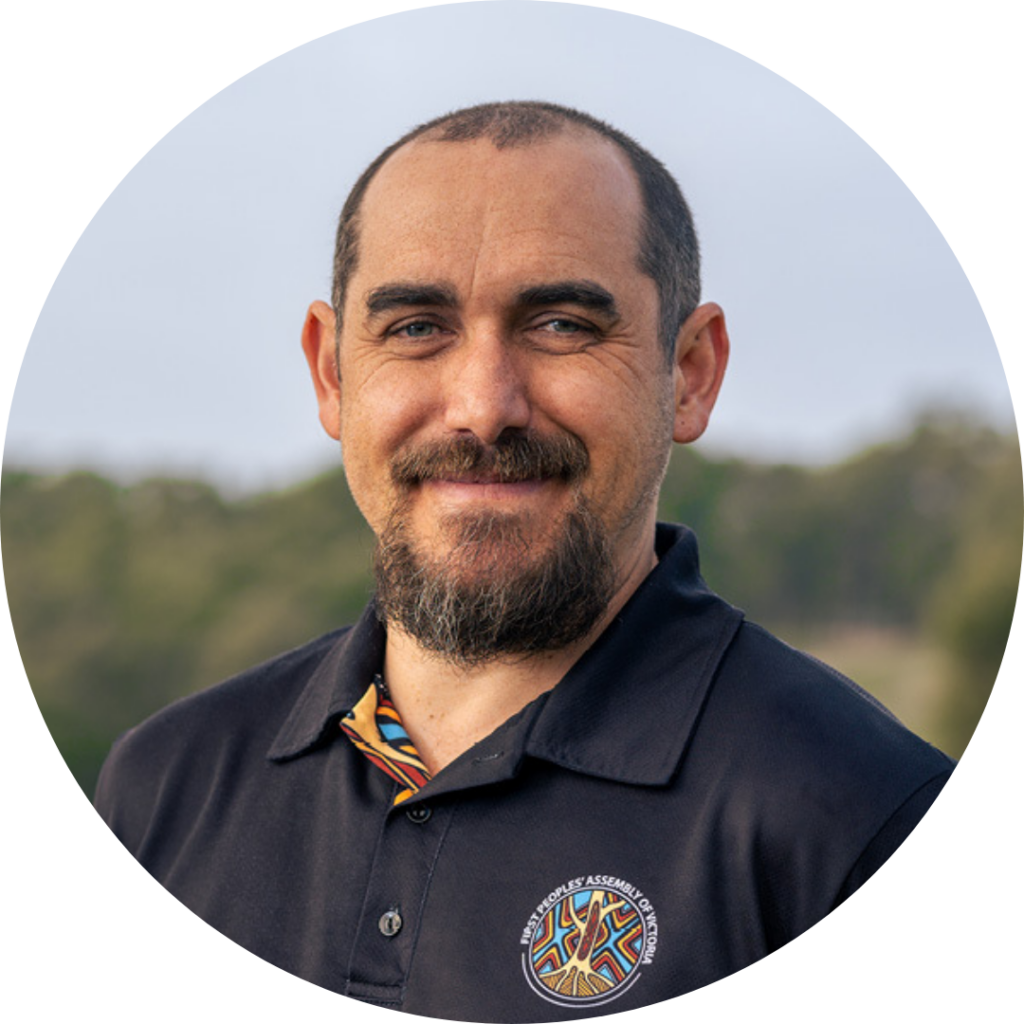
“Generosity is a key part of any sort of relationship. And it’s one thing to have that relationship between the leaders of both different groups, but you want that generosity across the board from all members of the communities with the other communities. So, I think that’s why it’s so keenly intertwined within that preamble document.”
At Conference 2026, Rueben will join The State of Generosity: Global Trends and Local Implications, a panel using the World Giving Report 2026 as a starting point to explore what generosity means in practice and how changing giving patterns are shaping philanthropy and community participation.
For Rueben, generosity first comes to mind in a cultural sense – First Peoples sharing stories, knowledge and culture, and bringing others along on that journey.
“That’s a really key part of our community, that generosity to one another – that expands then through the generosity that our community has to try and ensure that the broader community understands our culture and can come on that journey with us,” he explains.
Self-determination
Treaty is also one of the clearest examples of self-determination, which Rueben says offers a model for how philanthropy can better work with First Peoples.
“People talked about self-determination for a long time and for a while it seemed like it just involved asking First Peoples what they wanted and having them slightly involved.
“Now, with the treaty process, we’re enacting self-determination where First Peoples are actually decision makers on things – and not decision makers where we make a decision and then it still has to go to back to someone else for some final tick-off, but true self-determination where the buck stops with us as First Peoples.”
For philanthropy, Rueben says, that means supporting First Peoples on their own terms rather than prescribing solutions.
“If we’re truly talking about self-determination and generosity, it’s about saying, ‘we’ve got a good relationship with these groups. We’re going to empower them to be supported. And however they want to do it, that’s up to them’.”
The Assembly has also created a standalone Self-Determination Fund, managed by First Peoples. It currently supports traditional owners through treaty making, with broader ambitions to build economic prosperity for First Peoples through investment and grantmaking. Eventually, Rueben envisions it helping connect philanthropy with First Nations communities on self-determined terms.
Generosity, he says, also means recognising Victoria’s unique opportunity to share what it has learned through the Treaty process with others.
“I think part of what generosity is about is recognising when you have been given good fortune – and we have been given good fortune in Victoria to be able to have a treaty process – other jurisdictions haven’t had that same good fortune. So, we want to make sure we’re generous in sharing our knowledge and understanding of our process and supporting them on their journey.”
Looking ahead, Rueben says Treaty demands a long-term view, one grounded in responsibility to future generations.
“When we talk about Treaty, it’s not just what we are going to do in the next five years. We’re trying to think about it in terms of seven generations.”
Rueben Berg will be sharing insights at Conference 2026. Tickets are almost sold out. First Nations delegates are invited to the First Nations Gathering Space in Plaza Room 2, kindly hosted by Common Ground’s Gemma Pol and Travis Cloudy-Hensgen, and Millie Telford, Trustee, Reichstein Foundation. The Gathering Space will host a Welcome Morning Tea on Tuesday 8 September, 11.00am – 12.00pm.
Strategic priority
Convene


