
Australia’s giving paradox: why a wealthy nation underperforms on generosity
 Brianna Kerr, Director of Knowledge and Practice, Philanthropy Australia.
 Thu, 25 Jun 2026
Estimated reading times: 2 minutes
Thu, 25 Jun 2026
Estimated reading times: 2 minutes
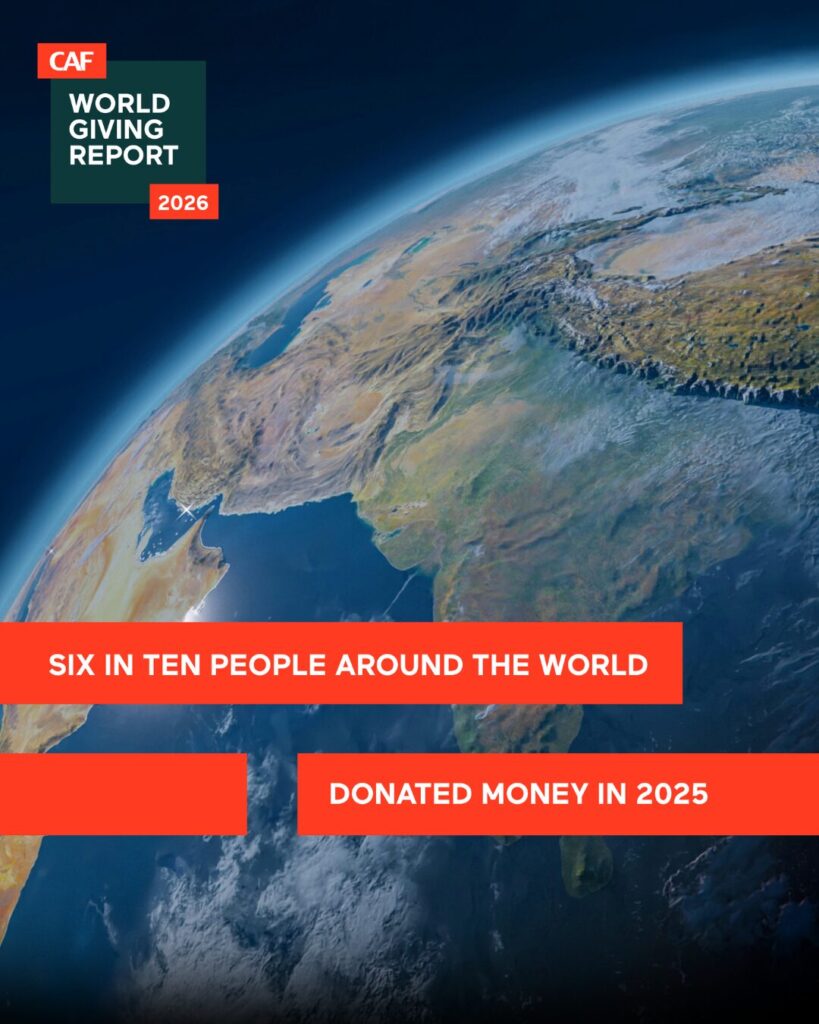
At first glance, global data on charitable giving presents a reassuring picture: generosity is widespread, with around six in ten people donating money in 2025. Yet beneath this apparent universality lies a striking divide.
The Charities Aid Foundation’s World Giving Report 2026 – Donor Insights shows that the world’s most generous societies are not the wealthiest, and that countries like Australia sit within a distinctive, and somewhat paradoxical, pattern of giving.
Australia’s story is best understood in contrast to global trends. Across Africa and Asia, people tend to give a larger share of their income and are more influenced by strong social expectations to support others. By comparison, high-income countries such as Australia, alongside Europe and North America, give a smaller proportion of income despite greater financial capacity.
This gap is not about whether people give, but how much. Australians are, like many around the world, likely to donate in some form. Globally, people give about 1% of their income on average, but this rises in lower-income regions and falls in wealthier ones.
The implication is clear: in countries like Australia, generosity is constrained not by ability, but by how giving is culturally embedded.
One way this appears is in how people give. Across Oceania, donations to charities are relatively more prominent than direct support or religious giving. This reflects a highly institutionalised model of generosity. Australians tend to give through formal organisations rather than informal networks. While effective, this distances giving from everyday social life. In many of the most generous countries, people give directly within their communities, reinforcing visibility and obligation.
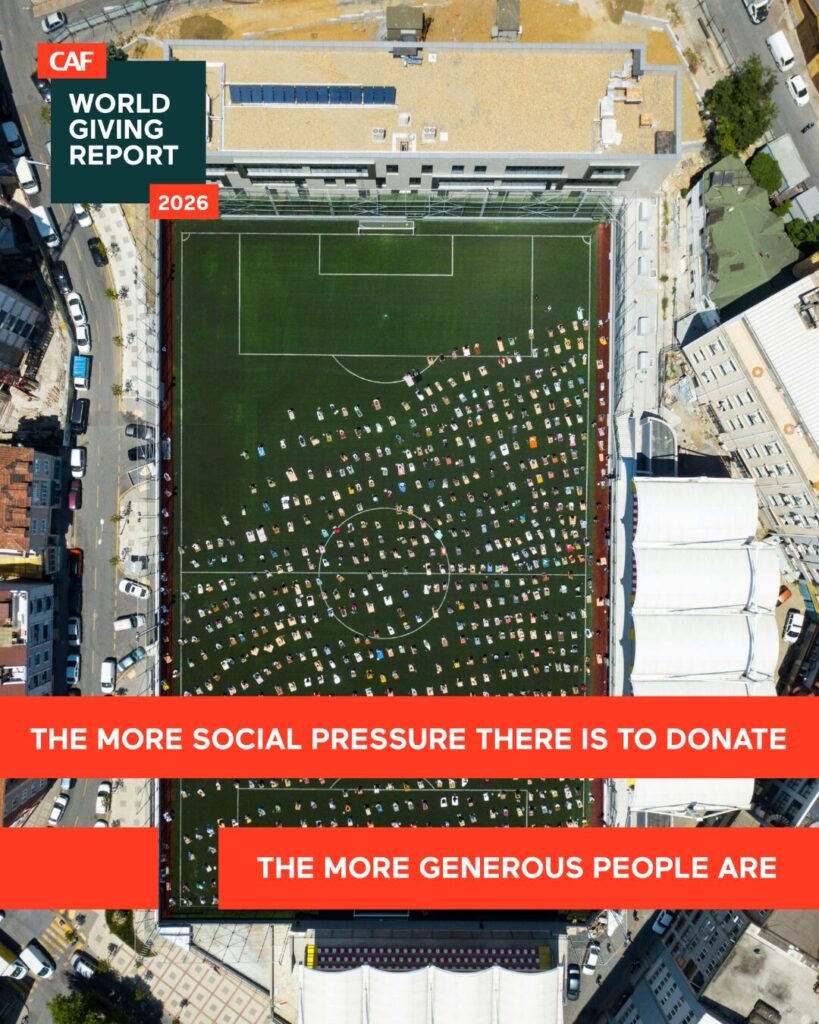
The role of social norms is crucial. People influenced by stronger expectations to give donate roughly twice as much. These norms, including the idea that giving is a duty or expected behaviour, are far more prevalent in Africa and Asia. Australia sits lower on this spectrum.
Giving is typically seen as a private choice rather than a shared expectation.
This helps explain why giving is less publicly discussed. Globally, conversations about giving reinforce social norms and are linked to higher generosity. Where such conversations are common, generosity becomes visible and contagious. In Australia, where giving remains private, this reinforcing effect is weaker. Paradoxically, wealth itself may dampen generosity. People in high-income countries are more likely to say they cannot afford to give and more likely to distrust charities.
These findings point to the importance of perception rather than material reality. Giving decisions are shaped less by absolute resources and more by how affordability and trust are understood.
Trust is therefore central. People with high trust in charities are four times more likely to donate and more generous overall. In wealthier countries, however, trust is often more fragile, with donors expecting clear evidence of impact.
Australian donors are therefore not disengaged, but discerning.
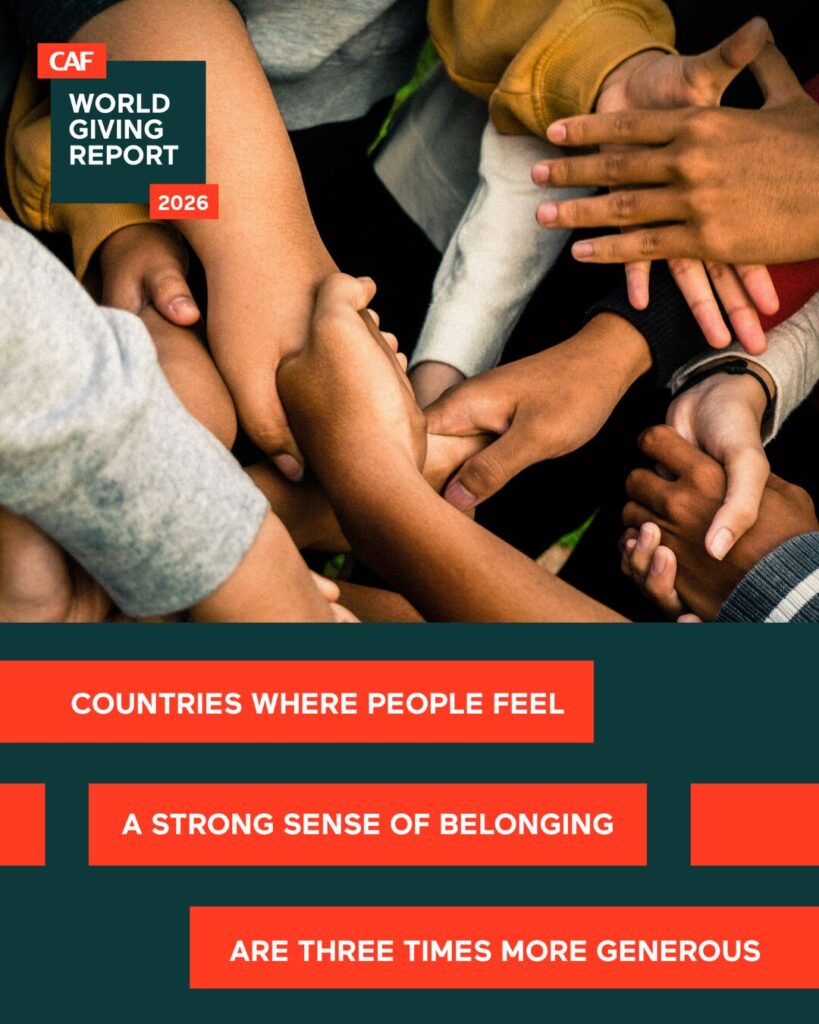
Importantly, the report highlights a powerful driver: community belonging. Countries where people feel strongly connected to their communities are three times more generous. This suggests that generosity is deeply relational. Where people feel part of something larger than themselves, giving becomes both more frequent and more meaningful.
For Australia, this is significant. As a comparatively individualised society, it may lack some of the social infrastructure that supports generosity elsewhere. Strengthening the link between giving and community identity may therefore be key.
Taken together, the evidence suggests that Australia’s challenge is not to encourage first-time giving, but to deepen and normalise it.
At present, generosity in Australia is characterised by structure without strong social momentum. It is organised and often effective, but not fully embedded in cultural norms.
The broader lesson is clear. Around the world, giving flourishes when it is woven into shared expectations, relationships and identities. In places where giving is simply what people do, it becomes more resilient and more expansive.
For Australia, the opportunity lies less in incentives and more in culture, fostering a society where generosity is visible, discussed and collectively valued.
The Charities Aid Foundation’s complementary report, World Giving Report 2026 – Charity Insights, is due to be released in September 2026.
Charities Aid Foundation’s Head of Research Alex Plumb will explore both reports at the Philanthropy Australia Conference, 7-11 September in Brisbane. Register now.
Strategic priority
Amplify, Influence


