
Youth Climate Justice Fund co-founder Joshua Amponsem on allowing community to shape philanthropy
 Stacey Knott, Senior Lead, Content & Media, Philanthropy Australia
 Fri, 7 Aug 2026
Estimated reading times: 2 minutes
Fri, 7 Aug 2026
Estimated reading times: 2 minutes
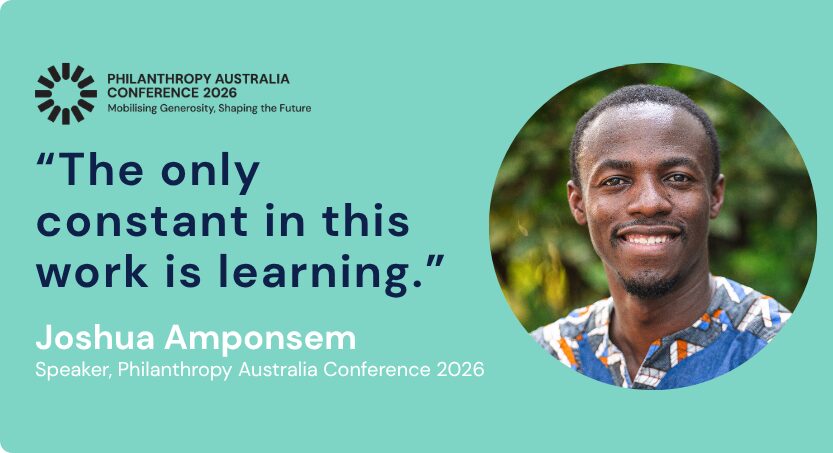
Before Joshua Amponsem learned the language of climate change, he was living its realities. Growing up in a farming community near one of Ghana’s major mining centres, he watched mining reshape livelihoods, alter the landscape and leave his community carrying the consequences. Years later, while at university and studying environmental sciences, he recognised many of the issues being discussed in lecture halls were already deeply familiar.
“For many, it’s that livelihood. But no one really uses the word climate. No one actually speaks that language. So it made me realise that we have got big work to do in bringing in communities.”
That realisation became the foundation of his activism, prompting him to organise fellow students and work alongside communities facing sea-level rises, plastic pollution and plans for a coal power plant.
Protesting Coal
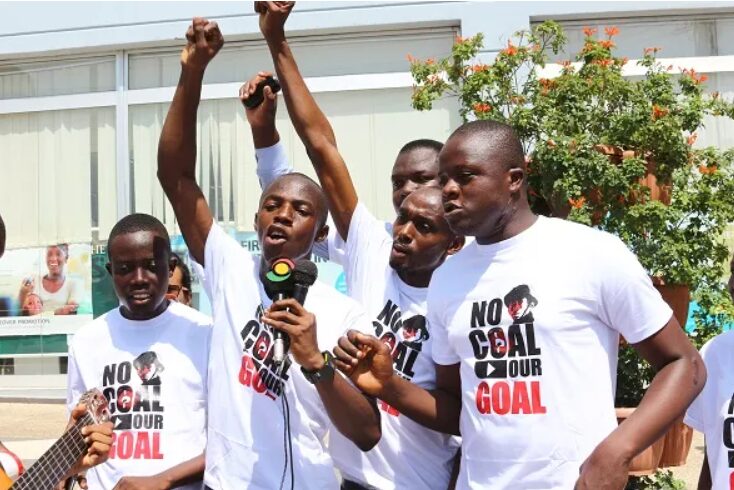
One of his first campaigns saw him opposing government plans to build a coal-fired power plant. In 2015, despite signing the Paris Agreement, Ghana also backed plans for West Africa’s first coal-fired power plant. He remembers looking to Australia, where campaigners were also pushing back against coal and calling for a more diverse energy sector.
“For us, it was really taking inspiration from groups like Power Shift and others who have done incredible work on campaigning.”
Joshua’s campaign was ultimately successful and kicked off his broader climate work. Over the next 13 years, he went from climate protesting to building community-led climate solutions. Through that work, he saw how climate impacts varied across Ghana, from coastal communities facing sea-level rise to farmers and residents living with pollution. Joshua will be joining other experts at Conference 2026, for the panel discussion Transaction to Transformation: Trust, Power & Community-Led Change.
His views on philanthropy were shaped by an early zero-waste project. A $1,000 pilot failed when bins were stolen and the original funder withdrew. A second funder backed the team to learn from the setback and continue. Five years later, the initiative expanded across multiple cities and helped bring United Nation’s recognition to Accra. This, Joshua says, is how philanthropy should work: sharing both the risks and the outcomes with communities.
Giving up power
A central theme of Joshua’s work is the belief that philanthropy must move beyond directing change and instead enable communities to shape it. He has repeatedly seen funders develop strategies, commission research and set priorities, then expect those on the ground to implement the decisions made elsewhere. He does not see this as the result of bad intentions, but as a longstanding tradition that has become accepted practice.
Joshua argues that funders should share responsibility, knowledge and risk with the communities they support, rather than trying to eliminate uncertainty.
“Building trust means that you do not prescribe everything. There is a genuine space where you actually experiment, where you live, where you trust, where you allow for people to lead the way they know how to lead in places where they actually understand, and they generate lessons and insight, because the only constant in this work is learning.”
Youth Climate Justice Fund
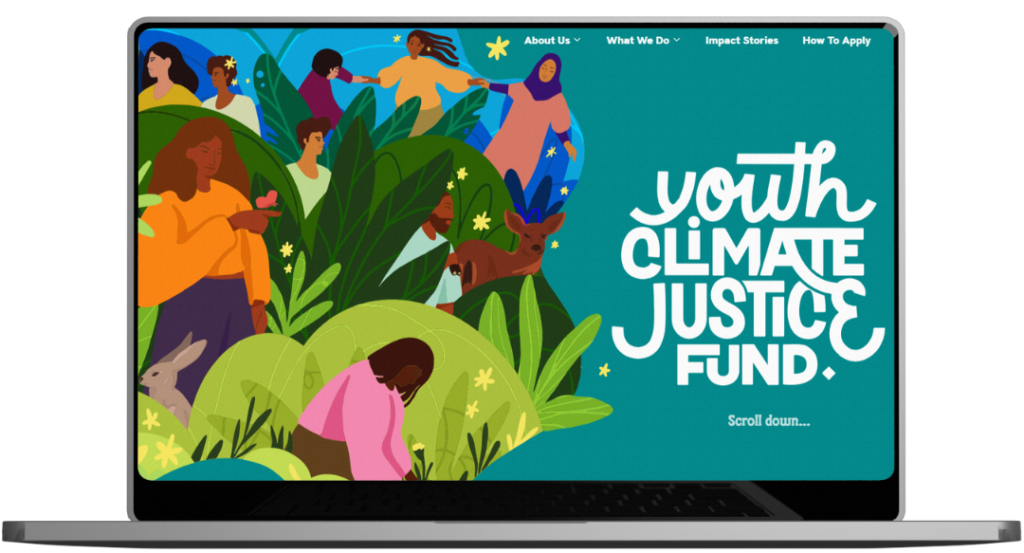
For Joshua, trust means giving communities genuine room to experiment and lead from their own knowledge and experience.
He co-founded the Youth Climate Justice Fund in 2023 to put young people in charge of designing the fund, governing it and deciding how resources are allocated. It rejects the idea that young people should fragment their lives to fit a donor’s categories. Its participatory model brings leaders rooted in different communities and regions into governance, giving them authority over priorities and where money goes. They work with funders in their giving journey to support more youth groups.
Anyone can apply for funding. So far, the Youth Climate Justice Fund has funded about 115 initiatives across the world and raised close to $40 million.
No option but optimism
For Joshua, the stakes are too high to give up on optimism. His outlook is shaped by seeing progress on challenges that once seemed impossible and by his own experience of benefiting from that progress.

“I didn’t die of malaria. A bunch of people I know also survived it. Why? Because communities kept trying. People kept trying, humanity kept trying.” For Joshua, that experience is proof that persistent investment in people can drive change. “I genuinely believe that the opportunity is supporting the younger generation to have the resources they need to become better leaders and to develop and build their communities the way that they envision it. If we do that, we don’t have any reason not to be optimistic.”
Reflecting on Australia, Joshua said philanthropy continues to play a critical role in backing First Nations communities, grassroots movements and local leaders to “lead with their wisdom and its proximity of intelligence”.
Looking ahead, he argues that youth-led movements deserve greater support and investment. “If we do not back them ambitiously, we’ve missed the opportunity,” he says.
He points to campaigns such as Youth Verdict taking on Waratah Coal and the leadership of Vanuatu students at the International Court of Justice as evidence of what is possible when young people are trusted and resourced. For philanthropy, what’s needed is clear: to “double down, go deeper, go wider, and really lean into that opportunity”.
Joshua will join Joanna Kerr, Founder and Principal of NutHatch (Canada), and Anita Patel, Vice President of Grantmaking at the Bush Foundation (USA), at Conference 2026 for the panel discussion Transaction to Transformation: Trust, Power & Community-Led Change.
Strategic priority
Convene
Subject
Communities, Energy, Environment, First Nations people, Sustainability


