
Voices of Impact: building an economy that works for everyone
 Stacey Knott, Senior Lead, Content & Media, Philanthropy Australia
 Fri, 16 Oct 2026
Estimated reading times: 2 minutes

Erinch Sahan is a global thought leader with 20 years’ experience in business design, transformation and investment. While touring Australia this month with the Next Economy, he spoke to Giving News about building an economy that works for everyone and investing for a just future.
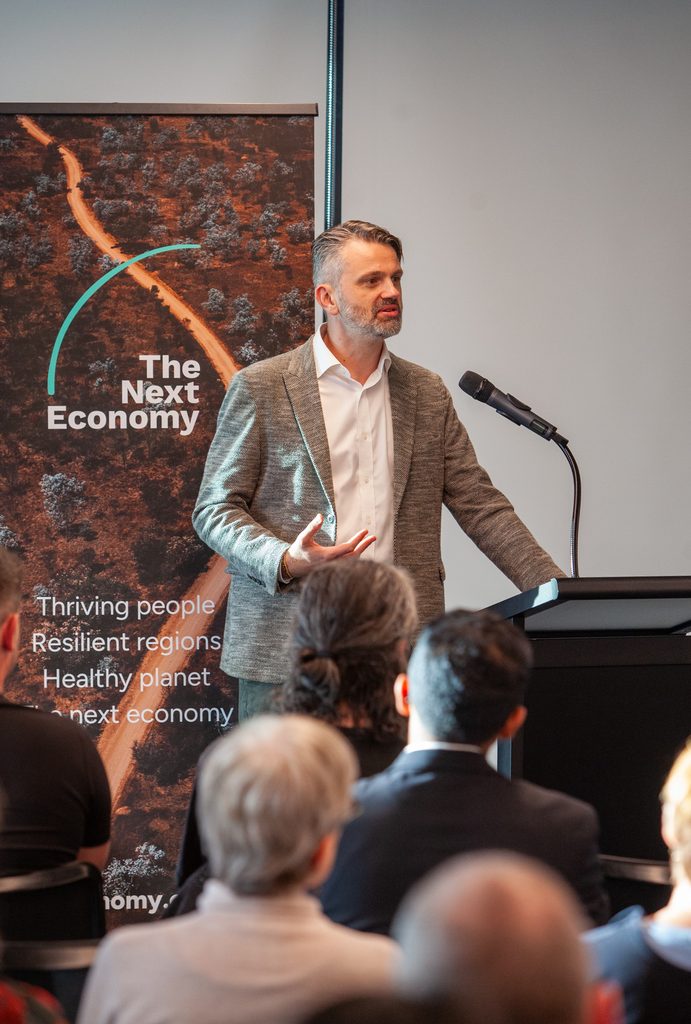
He currently leads work at the Joseph Rowntree Foundation to align its endowment with an equitable and just future. Previously, he had senior roles in fair trade, international development and Doughnut Economics.
Erinch advocates changing who owns, governs and benefits from business in order to distribute economic power more fairly – and give people a stronger voice in the decisions shaping their lives.
In the face of extreme wealth accumulation, rising inequality and eroding democracy, Erinch says an antidote is giving people a real stake in their economies.
“Giving people a sense of agency so that their voice is represented, for instance, through representation on a business board, gives them a sense that participation builds the democratic muscle memory needed to engage in broader civil and societal democratic engagement.”
Importantly, he says this need not be as complicated as it is often made out to be.
“Part of the battle is helping people believe that a different economic reality is possible,” he says.
Erinch points to real-world examples of reimagined economies where workers and communities share power. These include inclusive profit-sharing, purpose-driven business, shared ownership and redesigned governance -including giving nature a seat at the table, or examples like the John Lewis Partnership, co-owned by over 80,000 UK workers.
“These aren’t the margins of the economy. These are the stalwarts in mainstream business and the high street.
“Foundations have real opportunities to invest in ways that bring about those outcomes and invest in ways that legitimise those models, give them profile and shaping policy narratives as well. Really swinging for the fences on the kind of deep structural economic change that’s needed.”
Australia’s appetite for transformation
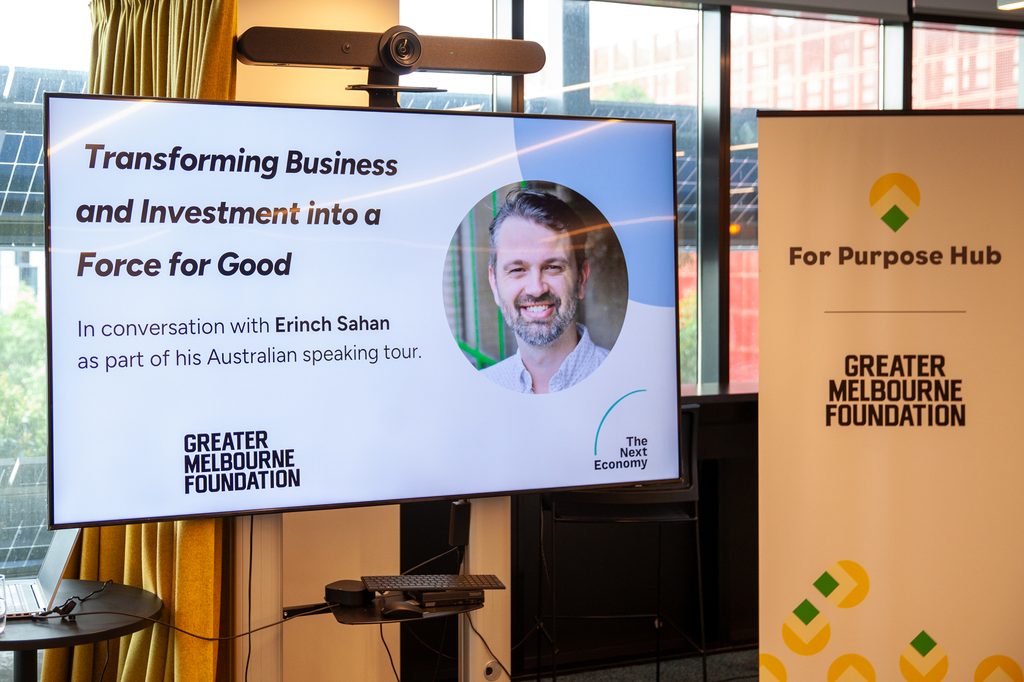
These models also create a role for philanthropy. Erinch points to an emerging appetite in Australia’s philanthropic sector for the economic transformation he promotes. While measuring the positive impact of investments remains important, he sees a willingness to move to the next iteration.
“I think there’s an opportunity and an appetite to leapfrog some of where the last ten years of impact investing has been and go straight into more transformational models,” he says.
“There is a level of ambition here. There’s been trepidation, a sense that in Australia, that we have to be quite cautious about how we invest and change, but also a realisation that we’re in an incredibly unique moment in history and that something more ambitious and structurally transformative is both possible and essential.”
This could mean changing how organisations are owned, governed and stewarded – and the investment approaches that support them.
Comparing Australia with the UK, he finds the challenges are similar. Aligning spending needs with portfolio returns can be complex, he says, making collaboration on risk, due diligence and support for local initiatives important.
Australia already has practical examples to build on, including the community-owned Barossa Co-op, alongside a wider ecosystem of employee-owned and community-led organisations. Erinch says these efforts rely on committed local leaders and a tolerance for complexity: meaningful change is iterative, participatory and tailored rather than a template rolled out step by step.
For Australian philanthropy, the practical next step is to use grants, endowments and convening power to back these models, strengthen local capability and share the risk of experimentation. His final message is a call to move beyond interest and commit to the work:
“Roll up your sleeves and take this stuff seriously because it’s going to do the heavy lifting of the economic and social and ecological transitions we need.”
Strategic priority
Amplify, Convene


 News
